
Valencia, Spain
Ongoing

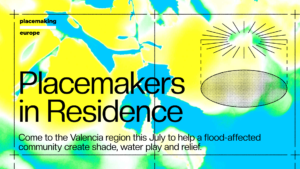
Placemakers in Residence

Meet the team

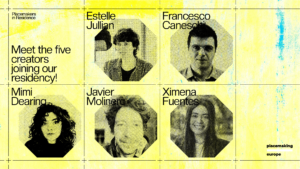
Following our Open Call,five multidisciplinary profiles have been selected to transform an outdoor public space in the Valencia region.

Together, they will help create a temporary, safe, and reversible summer installation combining water play, shade, and climate comfort.

Estelle Julian

Estelle Jullian is an architect, artist, and facilitator based in Valencia. Her work combines architecture, art, ecology, and citizen participation through community-engaged projects across Europe.

Read her interview

1. What drew you to this residency in Valencia?

I live and work in Valencia, and I’ve spent fifteen years developing community-engaged projects at the intersection of architecture, art and ecology — including participatory processes across the Valencian Community itself. Working on a temporary climate shelter for a community affected by the 2024 floods, right here in my own region, felt like a direct continuation of that practice: using design and citizen participation to respond to a concrete, urgent local need rather than an abstract brief.

2. What initial ideas or approaches are you hoping to bring to this project?

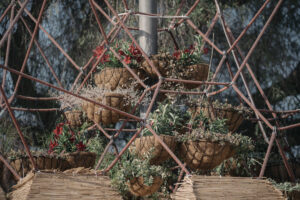
I’d like to start from listening rather than from a fixed design: working with families and children on-site early on so the installation responds to how they already use the space, not just to a brief. I’m particularly interested in bringing in shade and water strategies inspired by traditional Mediterranean climate-comfort devices — things like vine-arbour canopies or irrigation-channel logic — adapted with light, reversible materials suited to a temporary summer structure. Wherever possible, I’d want part of the building process itself to happen with the community, since that tends to make people feel ownership over the result and look after it once the residency ends.

3. One similar/related project I’m proud of

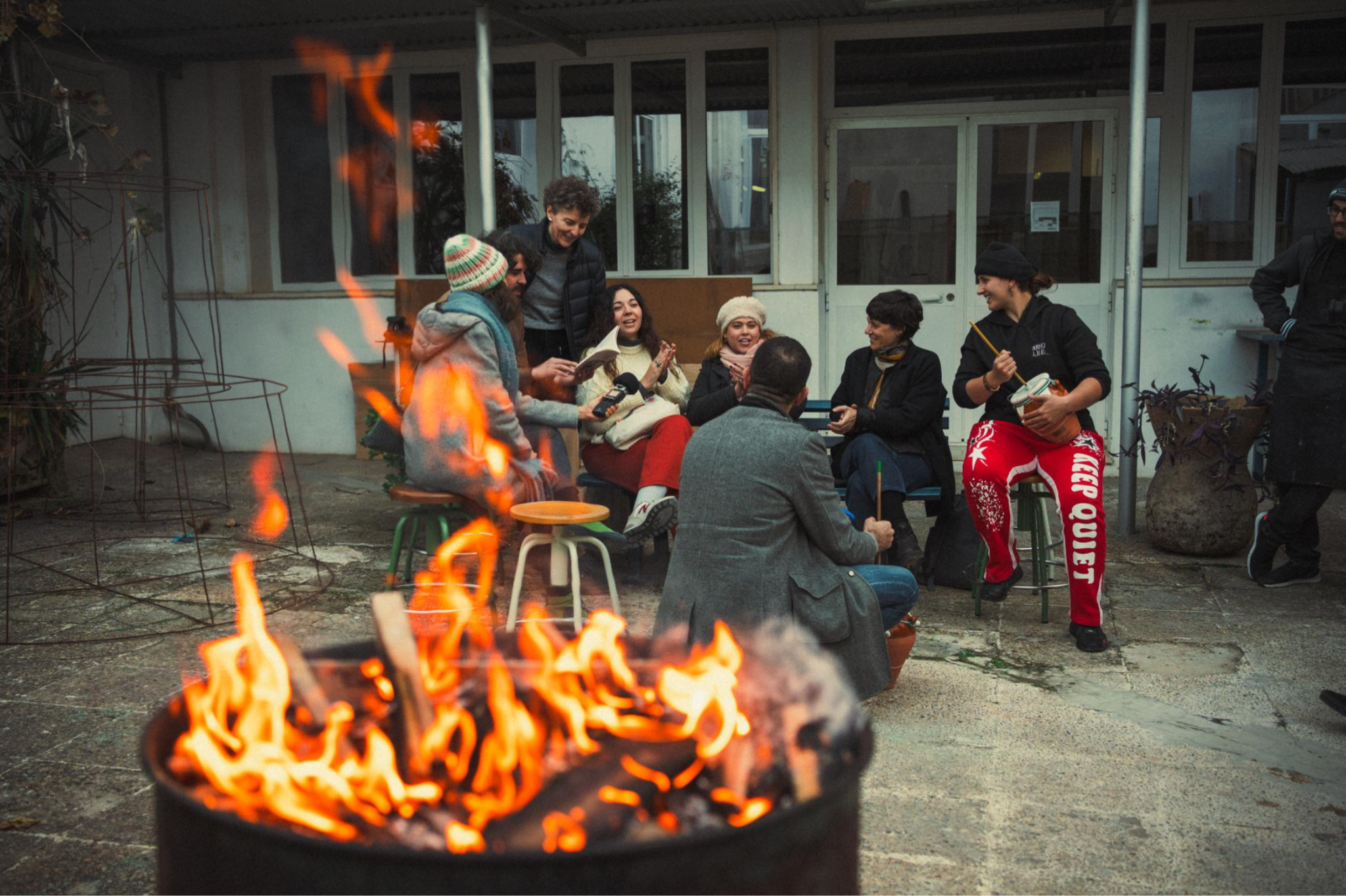
SONE — The Songs of Nearby Earth (Jerez de la Frontera, 2023–2026, PALIMPSEST H2020 / New European Bauhaus). I was selected through Nomad Garden’s Creative Dialogues open call as one of three European pilots on sustainable heritage activation. The project took the zambomba — a traditional ceramic instrument tied to local Christmas ritual — and reimagined it as a tool for landscape renaturalization, connecting it to emparrados (vine-arbour canopies), a traditional way of cooling and greening narrow city streets. Over three years of residential workshops with local ceramicists, instrument makers and a greening association, it turned an everyday cultural object into a working response to climate adaptation, culminating in an exhibition inaugurated by the Mayor of Jerez. It’s directly relevant here: climate comfort in public space, built through craft and community knowledge rather than imported solutions.

Estelle Julian

Estelle Jullian is an architect, artist, and facilitator based in Valencia. Her work combines architecture, art, ecology, and citizen participation through community-engaged projects across Europe.

Read her interview

1. What drew you to this residency in Valencia?

I live and work in Valencia, and I’ve spent fifteen years developing community-engaged projects at the intersection of architecture, art and ecology — including participatory processes across the Valencian Community itself. Working on a temporary climate shelter for a community affected by the 2024 floods, right here in my own region, felt like a direct continuation of that practice: using design and citizen participation to respond to a concrete, urgent local need rather than an abstract brief.

2. What initial ideas or approaches are you hoping to bring to this project?

I’d like to start from listening rather than from a fixed design: working with families and children on-site early on so the installation responds to how they already use the space, not just to a brief. I’m particularly interested in bringing in shade and water strategies inspired by traditional Mediterranean climate-comfort devices — things like vine-arbour canopies or irrigation-channel logic — adapted with light, reversible materials suited to a temporary summer structure. Wherever possible, I’d want part of the building process itself to happen with the community, since that tends to make people feel ownership over the result and look after it once the residency ends.

3. One similar/related project I’m proud of

SONE — The Songs of Nearby Earth (Jerez de la Frontera, 2023–2026, PALIMPSEST H2020 / New European Bauhaus). I was selected through Nomad Garden’s Creative Dialogues open call as one of three European pilots on sustainable heritage activation. The project took the zambomba — a traditional ceramic instrument tied to local Christmas ritual — and reimagined it as a tool for landscape renaturalization, connecting it to emparrados (vine-arbour canopies), a traditional way of cooling and greening narrow city streets. Over three years of residential workshops with local ceramicists, instrument makers and a greening association, it turned an everyday cultural object into a working response to climate adaptation, culminating in an exhibition inaugurated by the Mayor of Jerez. It’s directly relevant here: climate comfort in public space, built through craft and community knowledge rather than imported solutions.

Latest updates

We would love to feature active placemakers and placemaking projects in our community page, please fill the form below so we can get in touch with you:

24th — 27th

September, 2024

Creating better
cities together

We would love to feature active placemakers within our network and on our website. Please let us know by filling out this form:

Menu

About

About