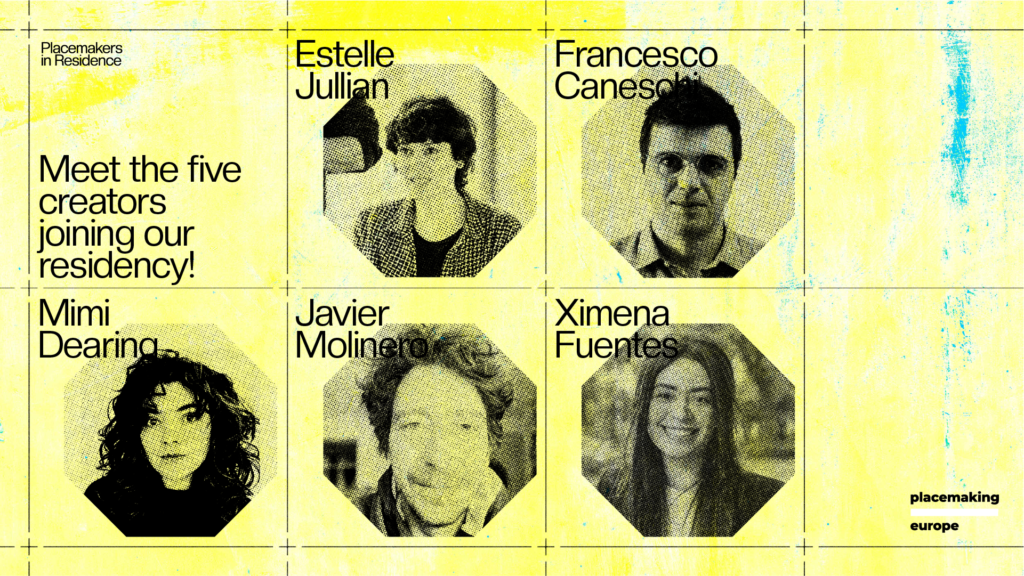
Following our Open Call, five multidisciplinary profiles have been selected to transform an outdoor space in the Valencia region. Together with us, they will help create a temporary, safe and reversible summer installation combining water, play, shade and climate comfort in a flood-affected town of the Southern Valencia Region.
Estelle Jullian
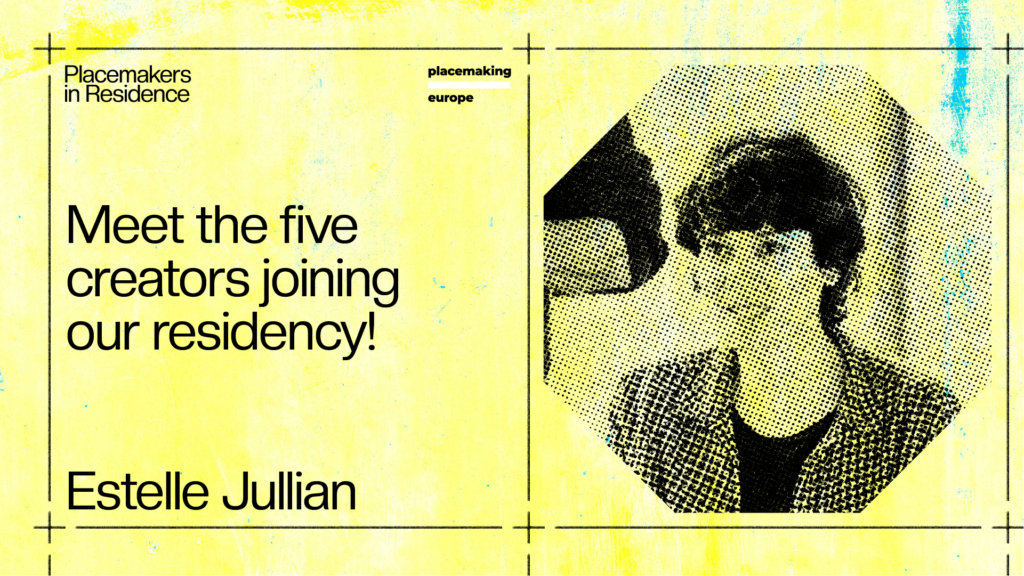
Estelle Jullian (IG: @ estellejullian) is a French-born architect (DPLG, ENSA Marseille) and independent artist based in Valencia, Spain since 2006. For over fifteen years she has worked at the intersection of architecture, art, ecology and citizen participation, designing community-engaged projects — participatory budgets, citizen labs, public art installations and material-based research — across Spain, France, Switzerland and Austria. Since 2020 she has coordinated the citizen participation department at Culturama, leading participatory processes for over a dozen municipalities in the Valencian Community. Her work has been shown internationally, including at Matadero Madrid, the Centre del Carme (Valencia) and Art Genève, and through residencies such as PALIMPSEST (Jerez), Atelier LUMA (Arles) and the Embassy of Foreign Artists (Geneva). She is a hybrid profile — architect by training, working primarily as a facilitator, artist and cultural project manager who reads a site technically, designs participatory processes, and builds with local hands and local materials.
Estelle Jullian Website
1. What drew you to this residency in Valencia?
I live and work in Valencia, and I’ve spent fifteen years developing community-engaged projects at the intersection of architecture, art and ecology — including participatory processes across the Valencian Community itself. Working on a temporary climate shelter for a community affected by the 2024 floods, right here in my own region, felt like a direct continuation of that practice: using design and citizen participation to respond to a concrete, urgent local need rather than an abstract brief.
2. What initial ideas or approaches are you hoping to bring to this project?
I’d like to start from listening rather than from a fixed design: working with families and children on-site early on so the installation responds to how they already use the space, not just to a brief. I’m particularly interested in bringing in shade and water strategies inspired by traditional Mediterranean climate-comfort devices — things like vine-arbour canopies or irrigation-channel logic — adapted with light, reversible materials suited to a temporary summer structure. Wherever possible, I’d want part of the building process itself to happen with the community, since that tends to make people feel ownership over the result and look after it once the residency ends.
3. One similar/related project I’m proud of
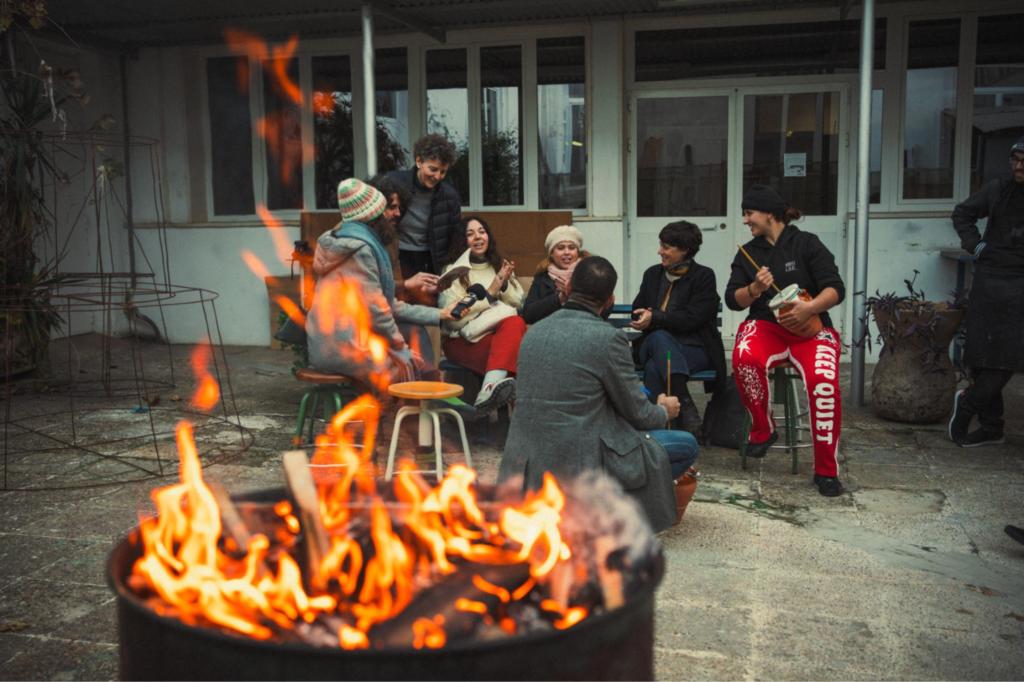
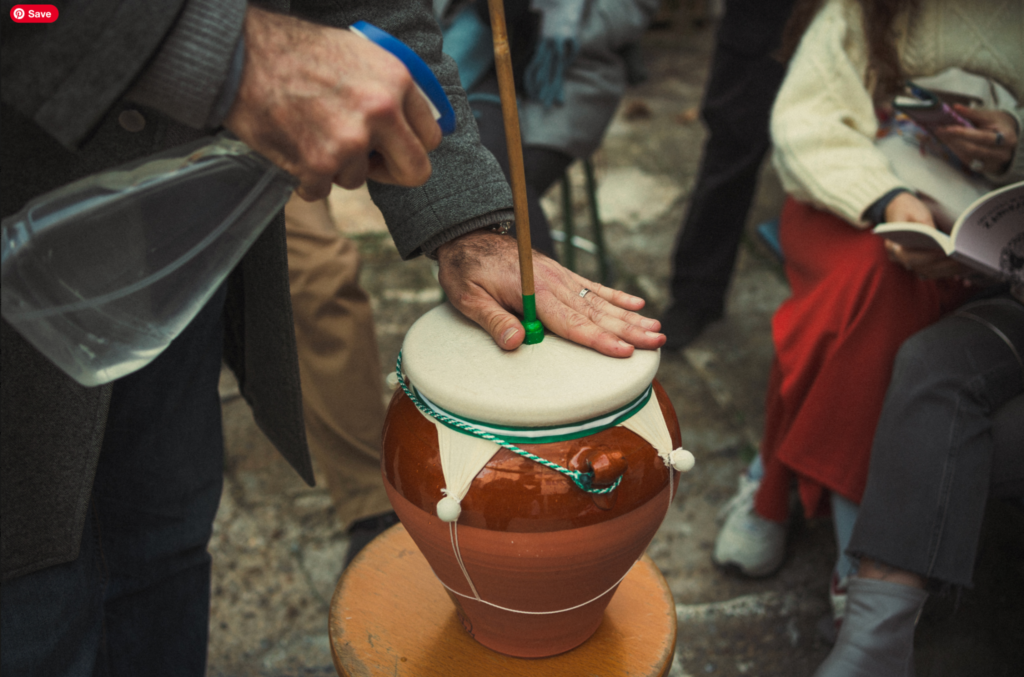
SONE — The Songs of Nearby Earth (Jerez de la Frontera, 2023–2026, PALIMPSEST H2020 / New European Bauhaus). I was selected through Nomad Garden’s Creative Dialogues open call as one of three European pilots on sustainable heritage activation. The project took the zambomba — a traditional ceramic instrument tied to local Christmas ritual — and reimagined it as a tool for landscape renaturalization, connecting it to emparrados (vine-arbour canopies), a traditional way of cooling and greening narrow city streets. Over three years of residential workshops with local ceramicists, instrument makers and a greening association, it turned an everyday cultural object into a working response to climate adaptation, culminating in an exhibition inaugurated by the Mayor of Jerez. It’s directly relevant here: climate comfort in public space, built through craft and community knowledge rather than imported solutions. You can learn more about Estelle’s reference projects here.
Below: SONE — The Songs of Nearby Earth (Jerez de la Frontera, 2023–2026, PALIMPSEST H2020 / New European Bauhaus).
Mimi Dearing
Mimi Dearing (IG: @mimidearing) is a London-based artist, producer and founder of community arts organisation Get It Done (IG: @we.getitdone), producing participatory works in the public realm. Her practice brings together community participation with contemporary public art, inviting residents to shape projects that respond to the cultural, social and environmental context of a place. Strong themes of her work include imagination, play, connection and justice.
Mimi’s work often engages with the climate crisis in public space, using participatory formats like games, temporary installations and collaborative making to explore how communities can become more connected and resilient in looming climate catastrophe. Recent projects include inflatable playgrounds made from recycled materials, shadow sculptures activated by the sun, and temporary builds across public places. Since 2017, she has worked extensively across the UK with partners from the British Council to the V&A, as well as on projects internationally in Türkiye, Estonia and France.
1. What drew you to this residency in Valencia?
This project feels like a direct extension of my previous work developing temporary installations around climate change, and an opportunity to bring those approaches into a live, community context.
As we’ve seen from these recent abnormal heatwaves to the devastating DANA floods, the climate crisis has arrived, and culture plays a crucial role in how we now respond to it. I’m really looking forward to collaborating with and learning from this exceptional team and community!
2. What initial ideas or approaches are you hoping to bring to this project?
I’m particularly interested in working with water and shade during this residency. Water carries a real and intimidating weight in Valencia; I’m interested in how it could be reintroduced into public space as something people can actively use; for cooling, gathering and play. I’m hoping to design some participatory water playing, shade casting structures and sculptures that can be integrated into our collective work.
3. One similar/related project I’m proud of
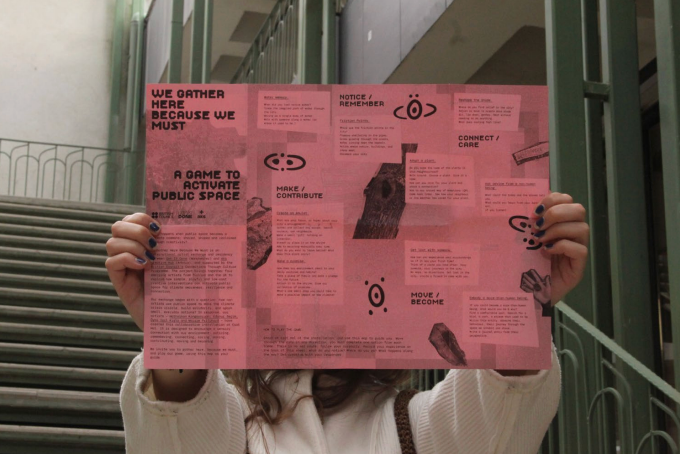
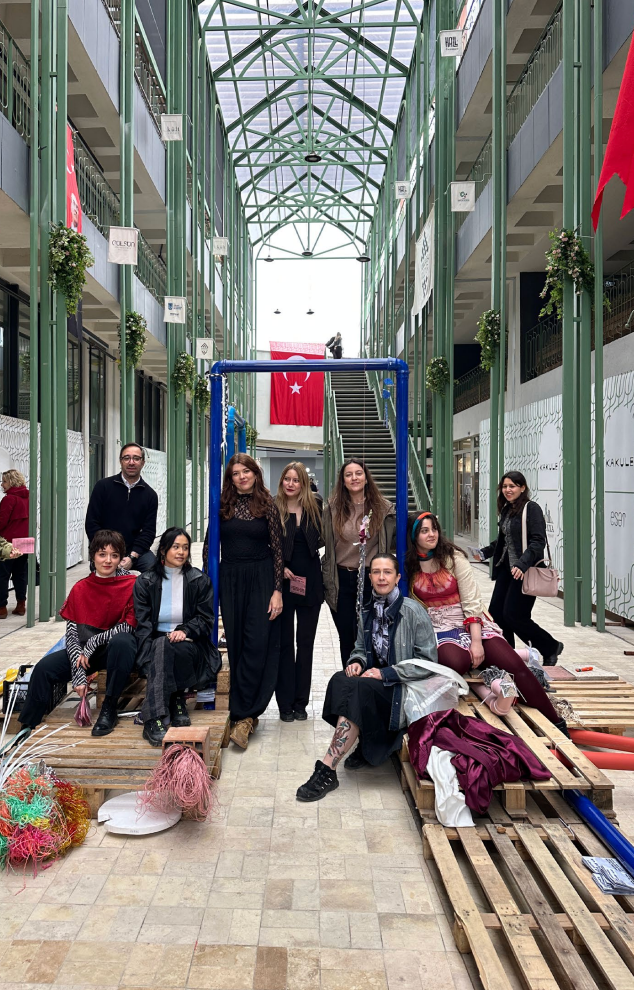
WE GATHER HERE BECAUSE WE MUST (2026) – Ankara, Türkiye. This year I led We Gather Here Because We Must; a residency and exchange project between community arts organisation Get It Done and urban design studio Aks, bringing together artists from the UK and Türkiye to explore how artists can use public spaces to speak about the climate crisis, build solidarity and spark everyday actions.
Below: We Gather Here Because We Must
Francesco Caneschi
Francesco Caneschi (b. 1990) was born in Florence, Italy. He completed his PhD in July 2026 with an action-research project titled Glocal Tools: Temporary Urban Actions for the Collective Production of Space. In 2023, he co-founded the cultural association Superterrestre APS, dedicated to research through design and public-space installations, as well as Studio Pratico SC, a cooperative of architects and engineers. He is devoted to studying and implementing how we can collectively and democratically improve our urban life and environment. His publications and research interests focus on urban commons, public space, incremental and tactical urbanism.
1. What drew you to this residency in Valencia?
I am deeply motivated to support the Valencia community’s recovery through hands-on placemaking. I believe that temporary interventions offer immediate relief while also helping to heal the social fabric, returning a welcoming and shared public space to the citizens. I would be honoured to contribute my theoretical and practical skill set to the Placemaking Europe project.
2. What initial ideas or approaches are you hoping to bring to this project?
I hope to bring a highly participatory and hands-on approach, rooted in my direct experience with tactical urbanism, light construction, and community engagement. My background focuses on transforming complex public areas into accessible, affordable, and engaging spaces. I plan to introduce ideas for modular public space installations, acting as a facilitator to ensure that every spatial design truly answers the daily needs of local residents and children.
3. One similar/related project I’m proud of
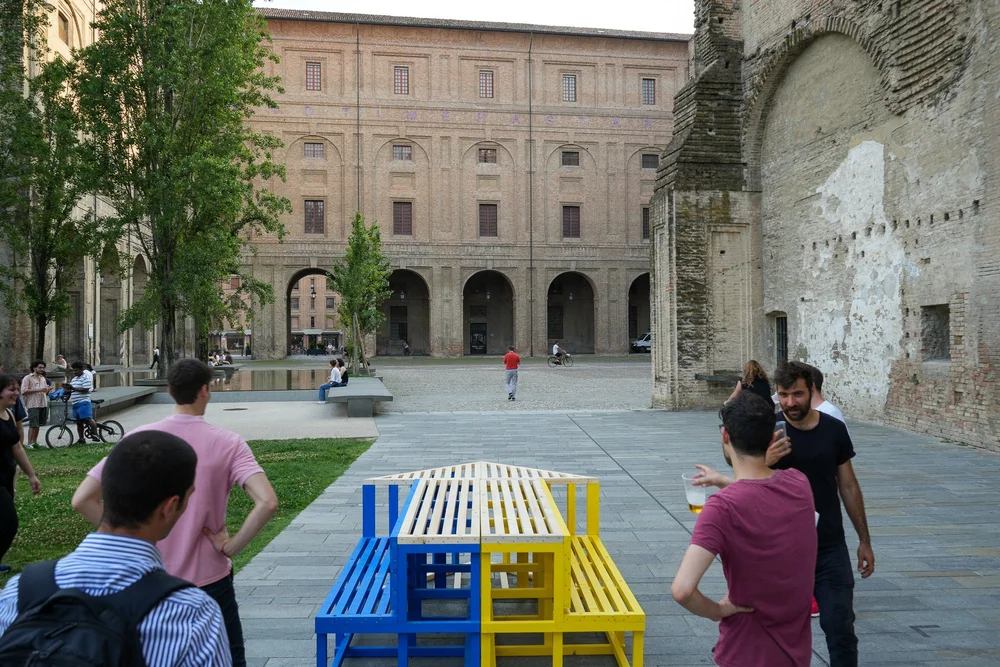
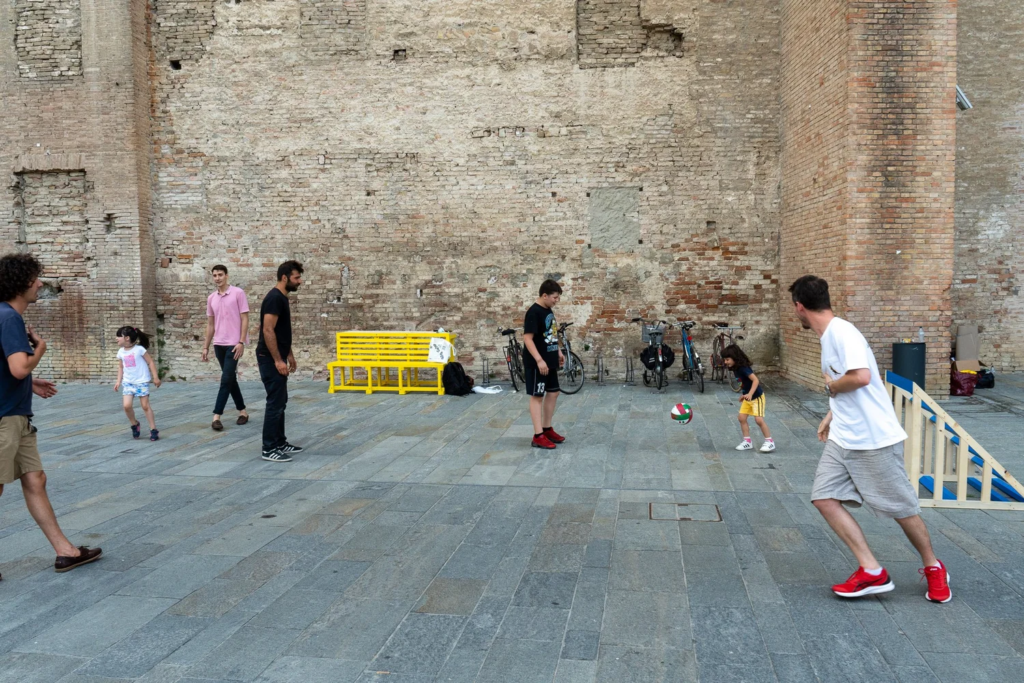
My methodology prioritizes rapid prototyping and modularity, drawing directly from my work on the Pilotta project in Parma for the LUP Association. There, I successfully activated a challenging public space with an interactive ludic installation. Building on that experience, I plan to implement easy-to-assemble cooling and shading elements in Valencia, combined with playable structures and urban furniture. By translating direct feedback from local sessions into practical design steps, I will ensure the final installation is both highly functional and immediately embraced by the neighbourhood. Find out more about my projects here.
Below: Pilotta project
Javier Molinero
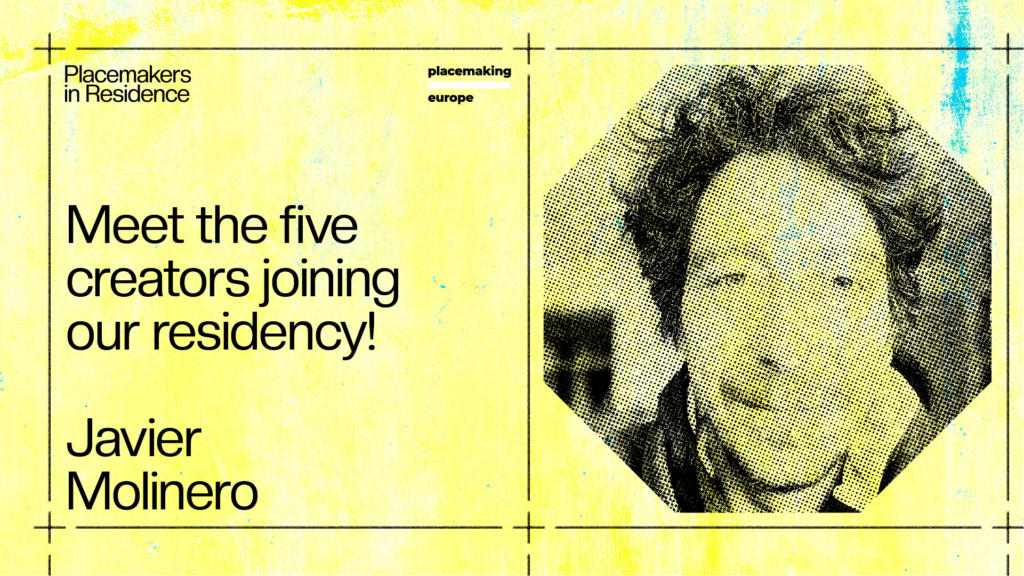
Javier A. Molinero Domingo is an architect, designer, and educator based in Valencia, Spain. Co-founder of Mixuro and currently part of Badallar Estudi, his work explores the intersection of architecture, design, sustainability, and citizen participation. Through collaborative and interdisciplinary projects, he develops tools and experiences that empower people to actively shape the spaces they inhabit.
Instagram: https://www.instagram.com/javiermolinero.badallar/
1. What drew you to this residency in Valencia?
When I saw the call and read about the profile needed I thought it was all about my field and what I enjoy most working!
2. What initial ideas or approaches are you hoping to bring to this project?
Listen to people involved in managing the place, listen to future user’s necessities and make all these agents a part of the team.
Then I usually read landscape and available materials as opportunities to tell a story about the place or the action we are trying to develop. Then I think about solutions with no limitations, imagination as a tool for solving problems.
3. One similar/related project I’m proud of
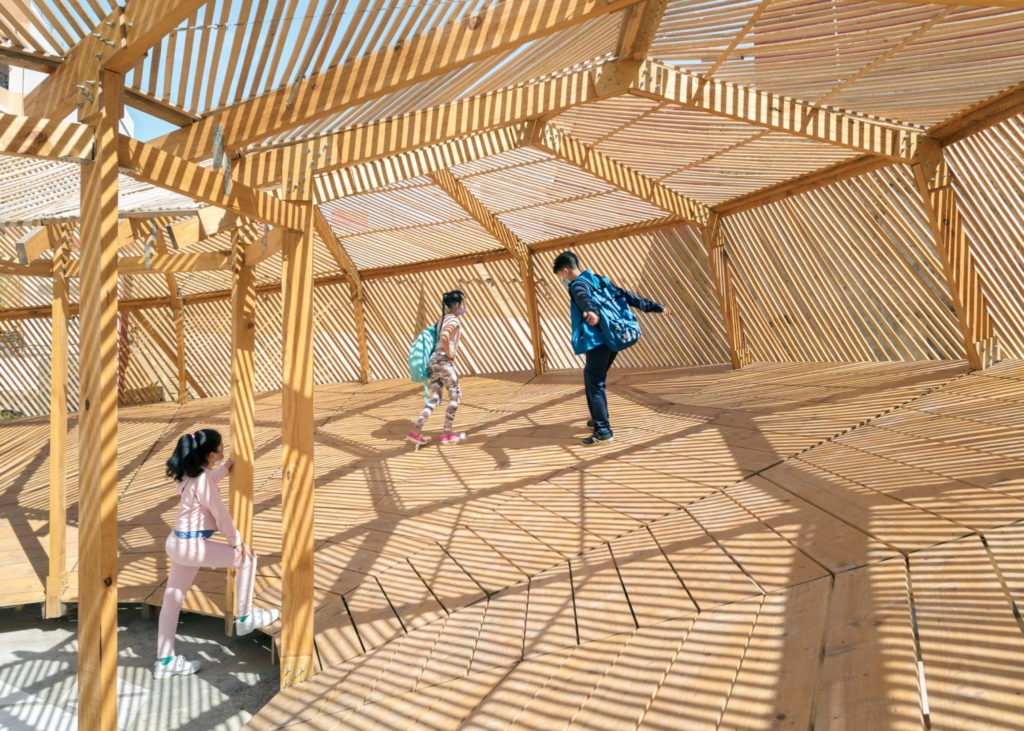
Zona Santiago, Valencia – turned an unused asphalt lot beside Santiago Apóstol School into an inclusive playground and outdoor classroom, built through participatory design with students, teachers, and neighbours. Guided by principles of material reuse, greening, low-impact construction, and collective making, the project repurposed old harbour buoys as tree planters and built a circular wooden structure (“the UFO”) serving as classroom, amphitheatre, and playground. Students helped throughout, and people with mental health diagnoses took part in construction. The project drew local attention and sparked wider conversation about renaturalizing schoolyards across Valencia.
Below: Zona Santiago, Valencia
Ximena Fuentes
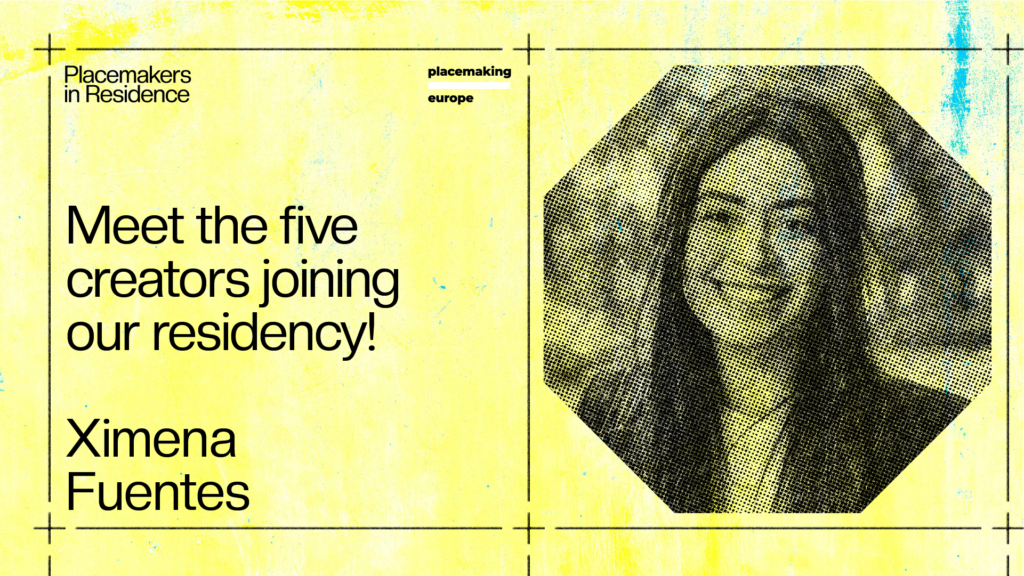
Ximena Fuentes Baicue (1992, Colombia) is a civil engineer and holds an MA in Creative Industries and Cultural Management from RUDN University in Moscow. Her transdisciplinary practice combines urbanism infrastructure projects, cultural research, and participatory design to activate public spaces as platforms for collective learning and belonging. She has experience developing and managing public space infrastructure projects in Colombia, integrating technical expertise with participatory methodologies. Her work on creative cities, placemaking and belonging has been presented at the Global Placemaking Summit (Mexico City) and Art on the Edge at the Higher School of Economics in Moscow.
1. What drew you to this residency in Valencia?
Growing up in a small town where public-space activation positively shaped my sense of community and fun made me understand the importance of shared spaces from an early age. I was drawn to this residency because it combines participatory processes, creative placemaking, and the challenge of developing an urban intervention with and for the community in a short time and with a holistic approach having involved different kinds of technical and artistic professionals. I believe that when people are involved in shaping public spaces, they are more likely to enjoy, care for, and continue activating them over time.
2. What initial ideas or approaches are you hoping to bring to this project?
I hope to combine participatory processes for activation with my technical background in civil engineering and experience in urban regeneration managment. I am also interested in using emotional cartographies to map people’s memories, needs, experiences, and aspirations, creating a living source of information that can support both the design process and future community-led activations after we leave.
I would like to contribute to creating a welcoming space that prioritises play, comfort, and social interaction while encouraging a sense of belonging and community ownership.
3. One similar/related project I’m proud of
The project I would like to highlight is the Alameda Caño Hondo project. I contributed to its technical planning and supervision, as well as collaborating in participatory processes and community meetings to understand local needs and aspirations. This experience allowed me to combine my civil engineering background with my interest in creating welcoming, community-oriented public spaces filled with fun and opportunities for connection
Below: Caño Hondo Alameda