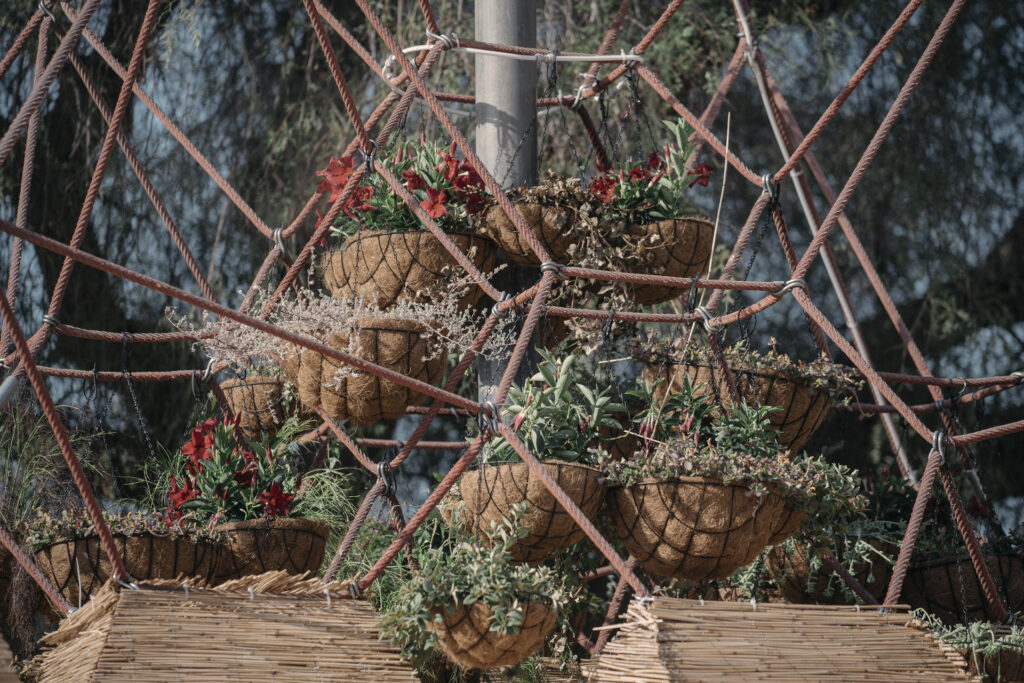
A trumpet playing beneath a fig tree. Children running around with their shoes full of sand. Folding wooden chairs, music powered by solar energy, and older residents sharing food at a long table.
It looks simple. But it does not happen very often.
We usually speak about intergenerational, inclusive and shared spaces. Yet how many places can we think of where grandparents, children, teenagers and adults can genuinely spend time together, outside a family celebration or a day at the beach? How many spaces allow people of different ages to meet without buying a ticket, ordering a drink or entering a branded event?
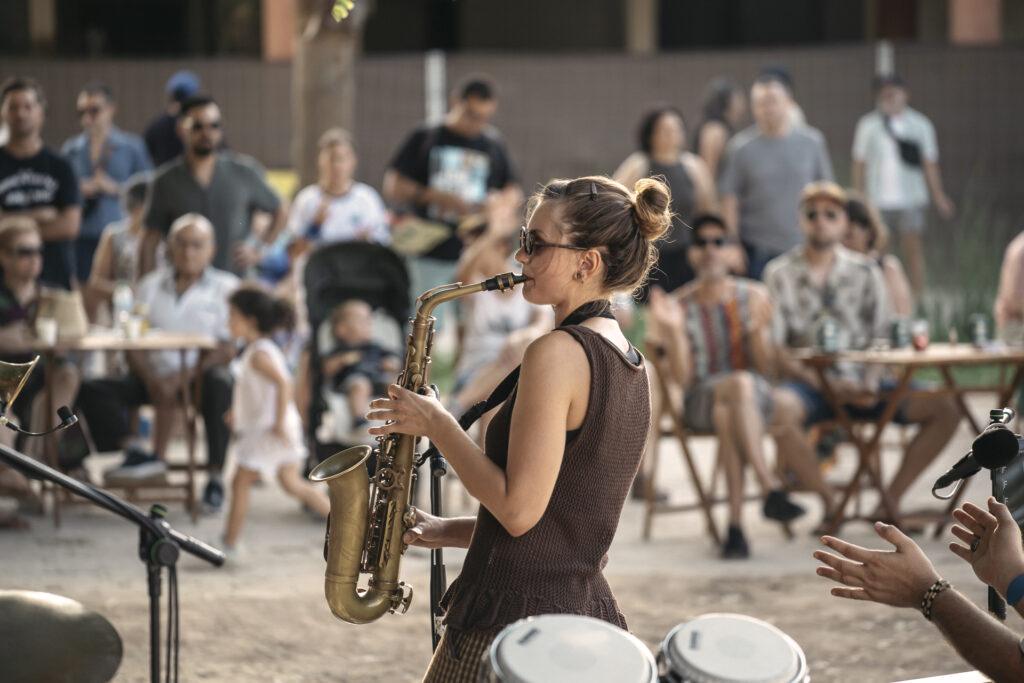
On 31 July, this scene took place during the opening of the Refugi Estival, a temporary climate shelter in Paiporta, near Valencia. The initiative was led by Paiporta City Council, developed together with Placemaking Europe and built throughout July with five resident practitioners, municipal teams and many people from the town.
It was a partial opening. Some elements still had to be completed, other decisions needed to be reviewed, and many aspects of the space could only be understood once people had started using it.
The project emerged from a concrete need. Paiporta is still recovering from the devastating floods of October 2024. This summer, large parts of the municipal sports complex remained unavailable, including its swimming pools and several shaded play and gathering areas.
In a context of increasingly extreme heat, losing these spaces has consequences that go far beyond leisure. People do not have the same capacity to protect themselves from high temperatures. Not everyone has a cool home, air conditioning, access to nature, a second residence or the resources to travel during the summer. Shade, water, vegetation and a place where people can simply spend time are becoming essential forms of public infrastructure.
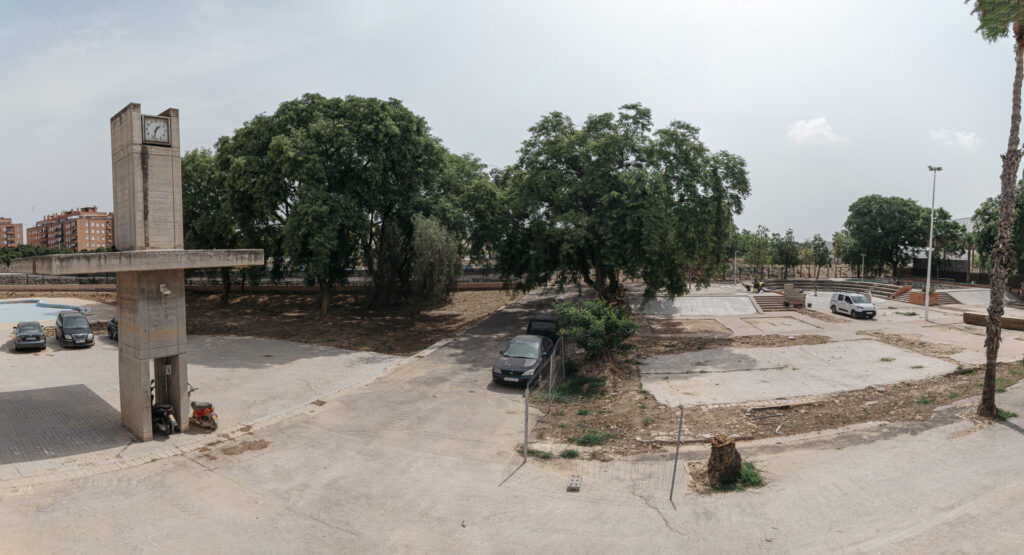
The shelter is not, however, a sufficient response on its own. It does not replace long-term climate policy, permanent infrastructure or broader recovery planning. It is a temporary, limited and experimental intervention, intended to provide something useful this summer while also creating an opportunity to learn.
Making it required much more than a good design. Resources had to be mobilised, teams coordinated, bureaucratic procedures adapted and many decisions taken as the project developed.
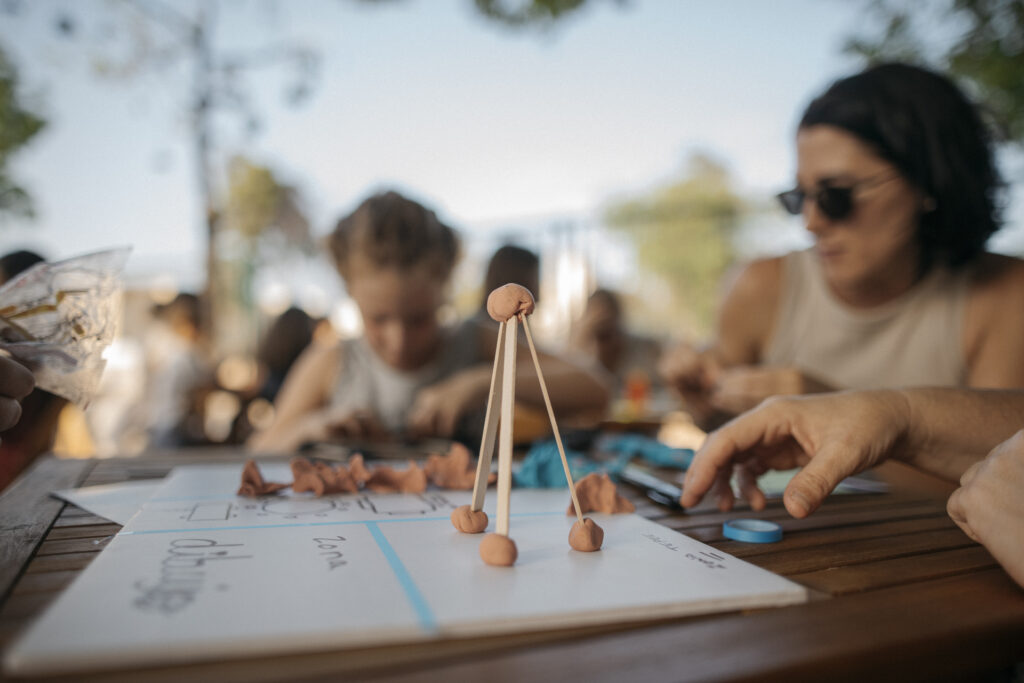
Five residents worked on the space throughout July. Mimi Dearing brought experience in public art, play, climate and community. Estelle Jullian connected architecture, art, ecology and participation. Francesco Caneschi worked through tactical urbanism, prototyping and modular construction. Ximena Fuentes contributed knowledge of civil engineering and urban and cultural management. Javier Molinero brought experience in architecture, sustainability, reuse and collective construction.
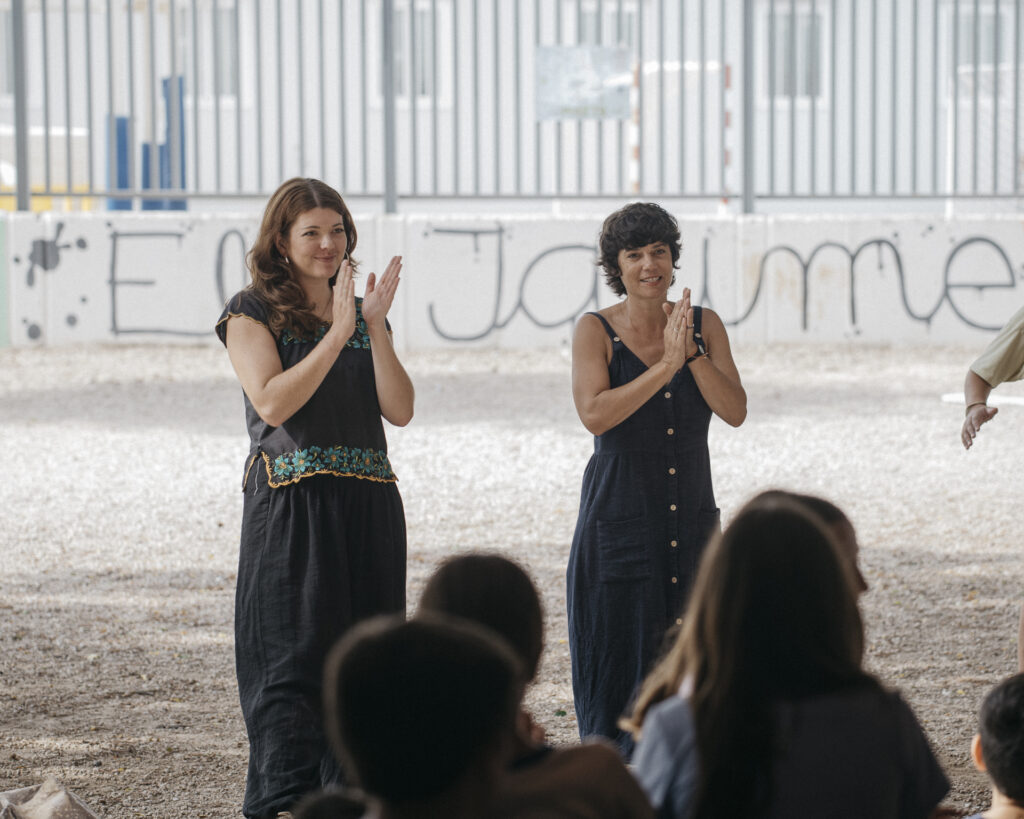
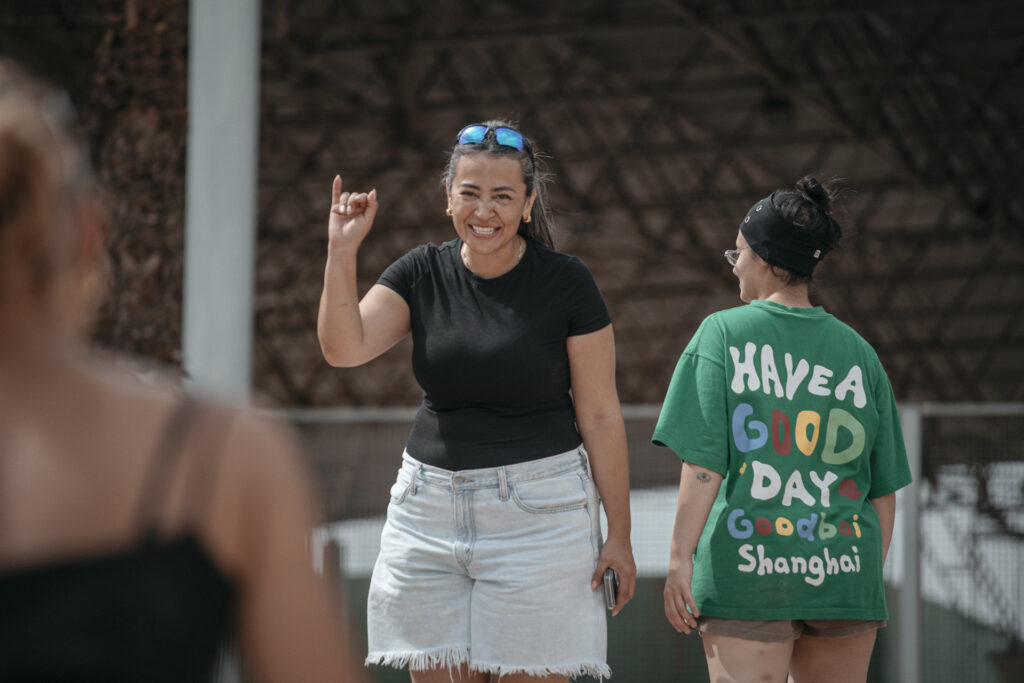
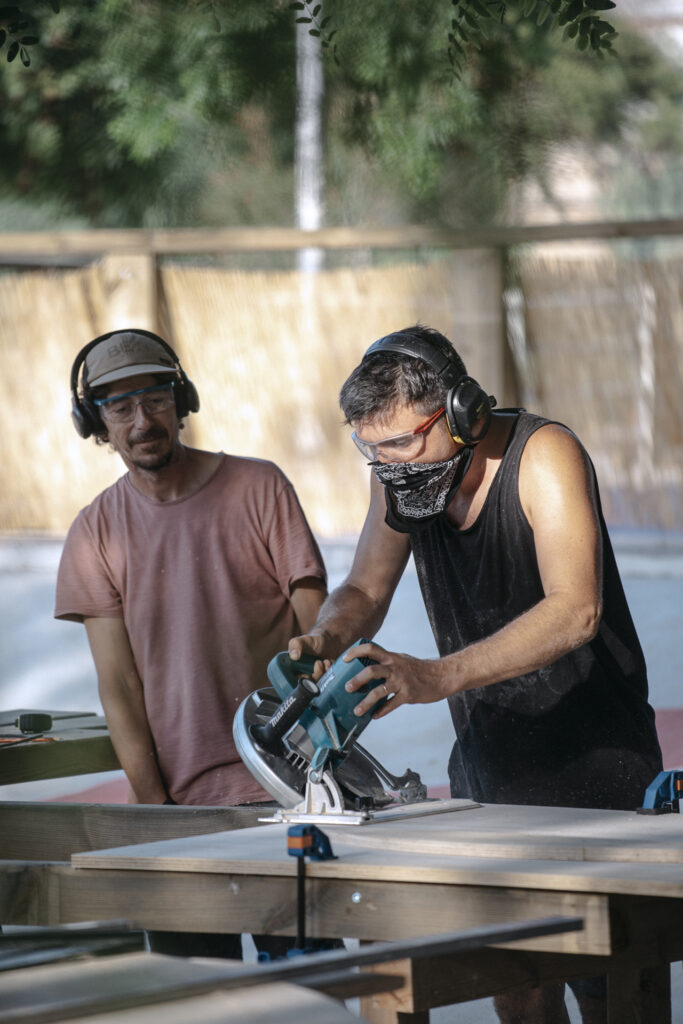
They did not arrive with a finished solution. They observed the site, spoke with users and municipal staff, drew, built, tested and adapted their proposals as new needs and possibilities emerged. Alongside them worked municipal services, maintenance teams, trainees, contractors, volunteers, children and local organisations. They worked with the resources, knowledge and energy already present to create a place people can use and continue shaping.
Every process of urban innovation needs people who can adapt the ways of working. Bringing a new idea from outside is not enough. There must also be people within institutions who are willing to take responsibility for testing, coordinating and solving problems. Paiporta City Council, with the support of Mayor Vicent Ciscar, Deputy Mayor Marian Val and municipal staff across different departments, accepted that the project could not be fully defined from the first day. This meant finding ways for procedures to support action when needs are urgent and cut across different areas of municipal responsibility. The needs of a place rarely fit neatly within administrative departments.
The floods had already revealed an extraordinary collective energy. People from many different places came to Paiporta to share tools, time and physical effort, helping to clean streets, repair homes and support those affected. If we can open ourselves to collective solidarity after a disaster, why should we not also share the construction of shared spaces?
The shelter attempts to carry part of that energy forward, without idealising it. Participation does not remove conflict or make every decision easier. It can slow processes down, expose contradictory needs and force people to reconsider earlier choices. But it can also help ensure that a space is not merely given, but shaped through the knowledge and involvement of many people.
It also offers a reminder of the value of simple public gatherings: food brought from home, music, conversation, play and moving chairs. This does not mean denying conflicts around noise, maintenance or coexistence. It means resisting the idea that every informal use of public space should automatically be treated as a problem.
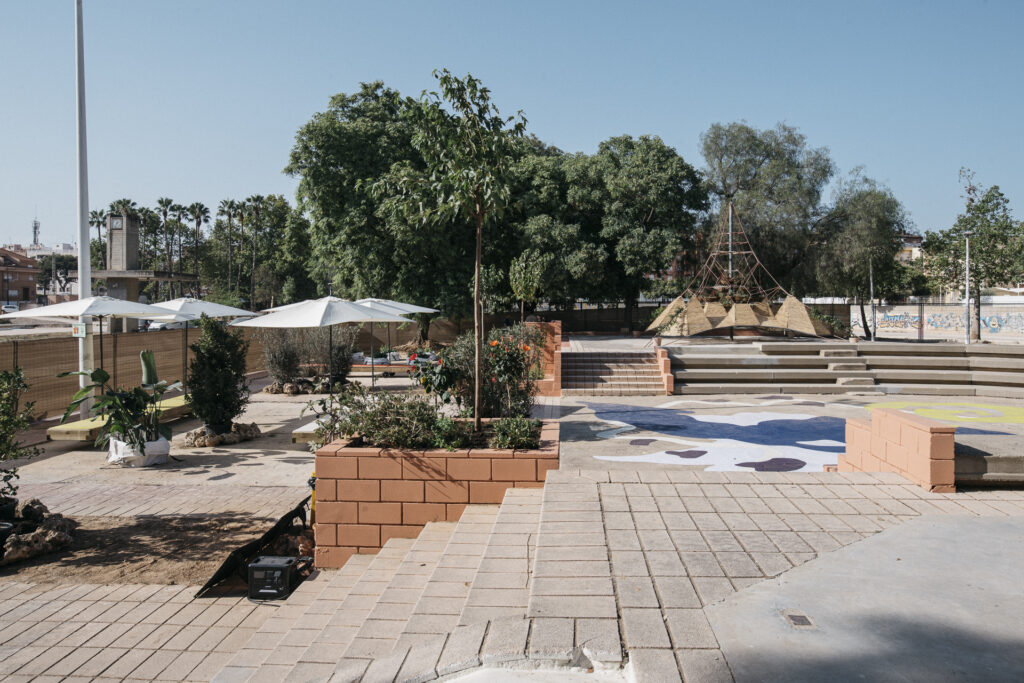
Now comes the next phase: learning, maintaining and reimagining. We need to observe what works, what does not, what requires more care and what should change. The Refugi Estival is not finished, and it is not a model that can simply be copied elsewhere. It is one possible way of testing how shared spaces can be built with greater generosity, flexibility and speed.
Photography: Paco Poyato