You leave the central station, turn towards its less monumental side, cross a street or two, and there they are: Chinese restaurants, Asian supermarkets, general stores, travel agencies, hairdressers, warehouses and budget hotels. Sometimes it is an official Chinatown, with its gateways and lanterns. Sometimes nobody calls it that, but the cluster is unmistakable.
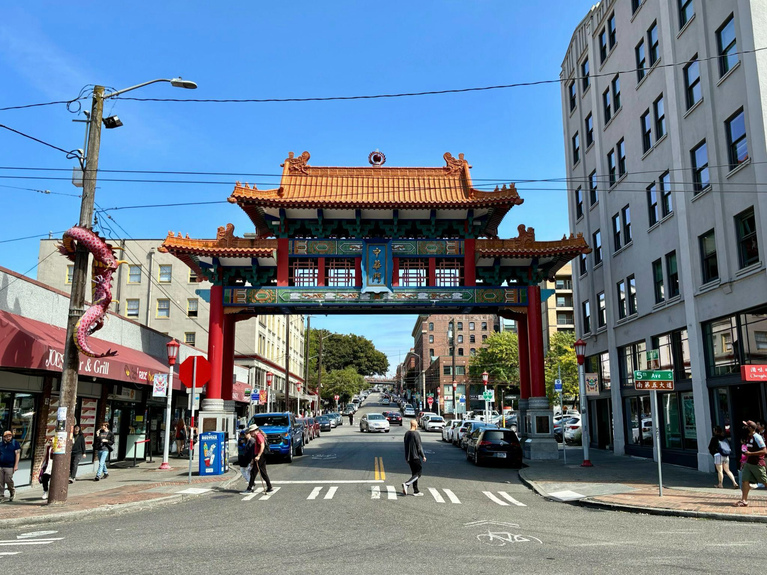
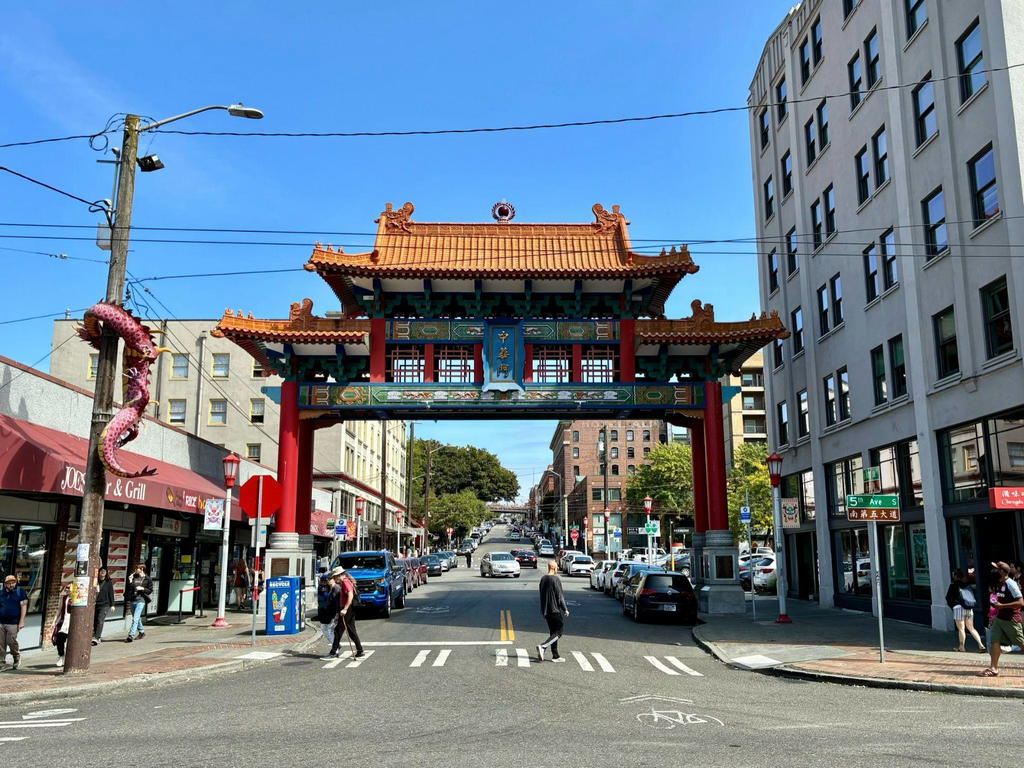
You find it in València, behind Estació del Nord. In Sydney’s Haymarket, near Central Station. In Seattle, where the Chinatown–International District sits beside King Street Station. In Los Angeles, the relationship is more brutal: Union Station was built partly over the old Chinatown, displacing the community that lived there.
This is no coincidence. For decades, the areas around major railway stations brought together an urban combination that now feels almost extinct: they were central, accessible and relatively affordable.
The station connected people to the whole city and the wider world. But it also brought noise, traffic, disruption and a constantly shifting population staying in cheap hotels. In front of the station, the city usually put on its best face: a square, an elegant hotel, a grand avenue, major shops. Alongside and behind it was another city. The centre’s backrooms.
These places were not peripheral in terms of distance. They might be a five-minute walk from city hall. Economically and symbolically, however, they were on the margins: cheaper premises, modest housing, small workshops and storage spaces. Streets with less prestige and more room for different uses. Places where newcomers’ businesses and livelihoods could take root.
Migration researchers use the term arrival infrastructure to describe the neighbourhoods, businesses, institutions and networks that help people settle in a city: finding a room, a job, someone to translate a document, a restaurant serving familiar food, or a first customer.
Much of this infrastructure is built by those who arrive first. A shop is also a source of information. A restaurant can become an informal employment office. An association provides social connections, help with paperwork and becomes a cultural space.
The point is not that migrants always arrive by train. It is that certain parts of a city can combine three conditions that are extraordinarily valuable when you are starting with little capital: affordability, flexibility and connectivity.
Seattle makes this relationship particularly visible. Today’s Chinatown–International District occupies an area south of downtown, close to the port and major railway infrastructure. King Street Station opened in the early twentieth century, surrounded by hotels, restaurants, shops and services catering to people constantly on the move.
But Seattle also reveals the other side of this history. Asian communities faced expulsions, segregation and restrictions on where they could live. Decades later, new infrastructure would cut through the same territory. Interstate 5 crossed the district in the 1960s. Infrastructure that connects can also divide. Infrastructure that creates centrality can also displace.
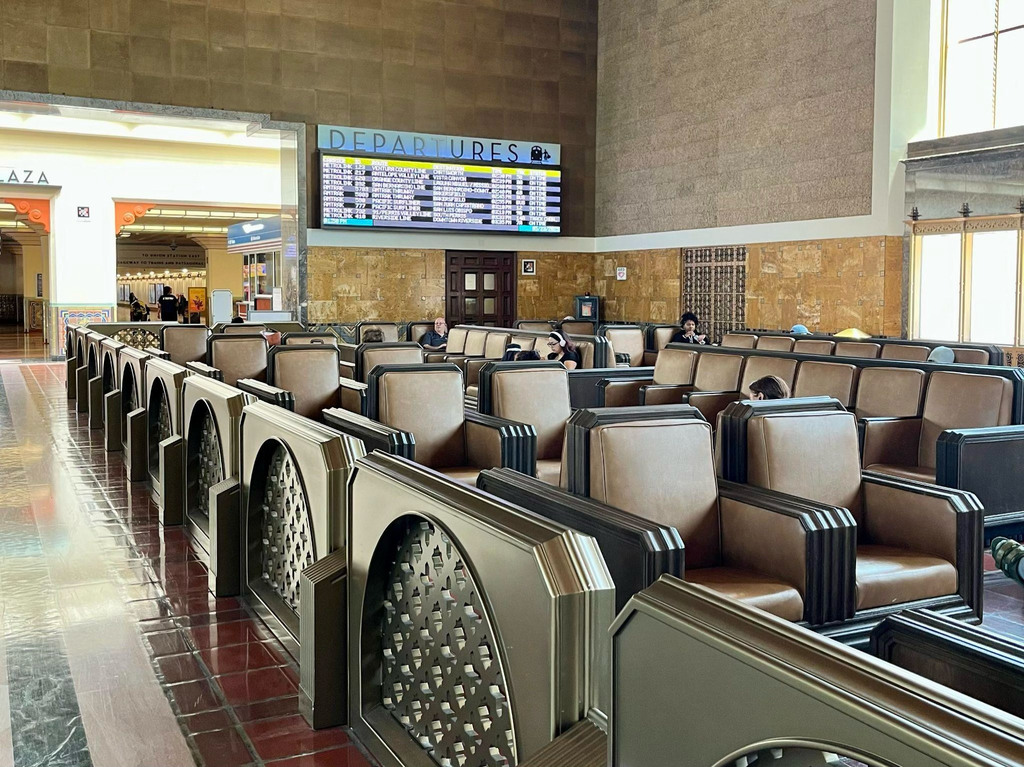
In Los Angeles, the story runs in reverse. Old Chinatown did not grow beside Union Station. Union Station was built over a substantial part of Old Chinatown. In the 1930s, homes, shops, workshops and warehouses were acquired and demolished, forcing residents to leave. Sometimes Chinatown appears beside the station. In Los Angeles, the station appeared on top of Chinatown.
It is a warning against an overly comforting account of centrality. The same places that allow communities with limited economic power to establish themselves can later become targets for major development projects precisely because they are central.
Sydney brings the economic logic into sharper focus. The Chinatown we now know in Haymarket was not the city’s first. Chinese residents and businesses had occupied other parts of the centre during the nineteenth century. A new concentration subsequently emerged further south, around the major markets.
Chinese farmers selling their products needed somewhere nearby to stay. Boarding houses and shops developed around them. Rents were lower and plots larger than elsewhere in the centre. Some furniture makers moved their workshops there. Grocers, restaurants, butchers and other businesses followed. Affordability, flexibility and connectivity, taking physical form.
Central Station completes this geography, but the underlying mechanism extends beyond railways. Haymarket was a place where people, goods and information circulated. Markets, trains, workshops, accommodation and commerce reinforced one another.
Decades later, that ecosystem would acquire the formal appearance we now associate with Chinatown. First came the everyday urban economy. Then came its representation: gateways, signs, branding and official recognition.
València offers a more recent and perhaps subtler example. The construction of Estació del Nord, between 1906 and 1917, transformed the neighbourhood of La Roqueta long before a significant concentration of Chinese businesses emerged. The station left a particular geography behind: streets that were exceptionally central but secondary in status to the nearby Eixample district or City Hall square.
When, decades later, a new business community found opportunities on streets such as Pelai, Matemàtic Marzal and Convent de Jerusalem, it was entering a place whose urban form already offered room for new activities.
Migrants do not need to arrive by train for the station to be relevant. A station can act indirectly, shaping a particular kind of urban space over many decades.
The same infrastructure can later serve a different purpose. Today, Estació del Nord allows people from across the metropolitan area and surrounding towns to reach Chinatown easily to eat, shop or spend an afternoon. A place that offered newcomers an accessible foothold gradually becomes a destination for the wider city.
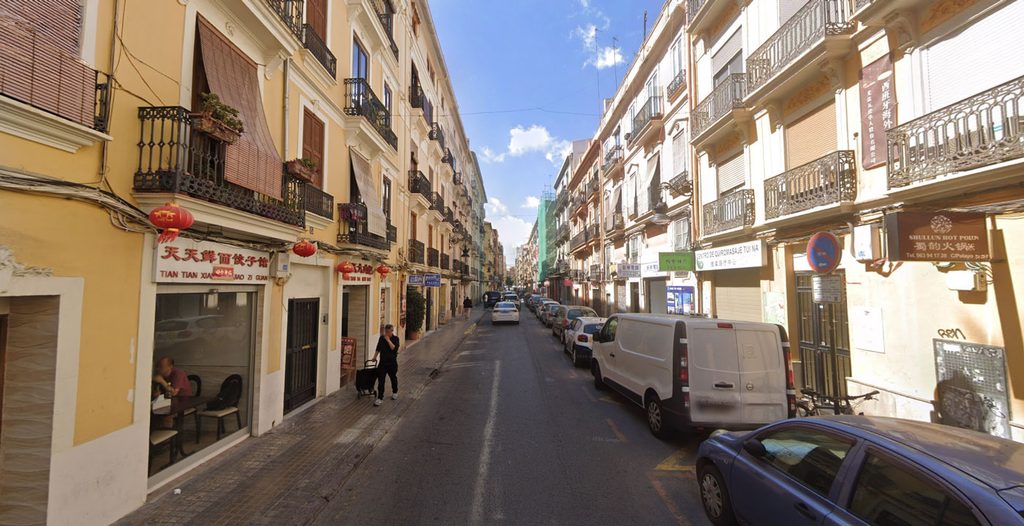
Other examples require us to broaden the argument. Usera, home to a substantial Chinese community in Madrid, is not behind a central station. It belongs to another geography of arrival: the industrial south, major roads, former production spaces and access to warehouses and wholesale trade. Cobo Calleja, in nearby Fuenlabrada, takes this logic further: industrial units, loading bays, distribution and a major concentration of businesses linked to Chinese trade.
The railway is one illustration of the importance of access. Ports, stations, markets, roads and industrial estates can create similar opportunities: places connected to networks much larger than the neighbourhood itself and, at least for a time, affordable enough to give newcomers a foothold.
Over the years, many of the conditions that made these neighbourhoods possible disappear. Warehouses become apartments. Stations are redeveloped. Land values rise. Cheap hotels become boutique hotels. Younger generations no longer need to live beside the family business. Goods no longer arrive by train.
Yet Chinatown may remain. By then, another infrastructure has developed, one much harder to relocate: reputation, relationships, customers, acquaintances, suppliers, associations, celebrations and memory.
The community that built it is no longer its only audience. The whole city comes for dinner. Tourists visit. Festivals take place. Investors arrive. The municipality installs lanterns or proposes a gateway. What began as a practical response to the availability of cheap premises becomes an urban identity.
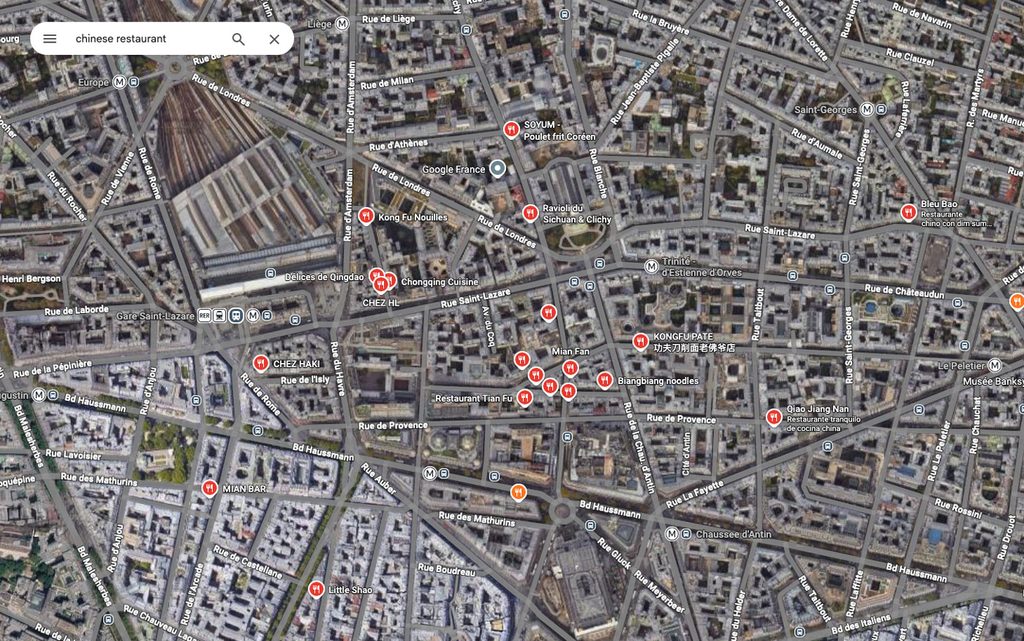
And another question emerges: who governs Chinatown once it becomes more than a cluster of businesses? The shopkeepers? The residents? The Chinese community, even when many of its members no longer live there? The municipality? The property owners? Restaurateurs whose customers come from across the metropolitan area? New residents who have paid far more to live there?
The discussion is no longer simply about preserving an identity. It is about who has the right to define it.
In València, this becomes visible in debates about whether Pelai needs Chinese gateways, distinctive signage or its own brand. These may look like aesthetic questions. They are questions about representation, governance and everyday life.
In Chinatown, you will find a supermarket where someone does their weekly shopping, a family restaurant paying rent, a support network. In València, you will also find a falla, one of the neighbourhood associations behind the city’s annual Falles festival. Its streets bring together Chinese businesses, long-established bars, migrants from other backgrounds, tourist accommodation and new residents. Pelai is even home to the historic venue known as the cathedral of pilota, the traditional Valencian ball game.
For placemaking, this raises a practical question: when we make a place more visible and attractive, do we also protect the conditions that allow people to keep making a life there?
Perhaps the most valuable lesson from these neighbourhoods is that, for a time, some parts of the city managed to be central and affordable at once. That apparent anomaly made room for people, economies and cultures that might otherwise have found no foothold there.
Today, many cities are moving in the opposite direction. They are turning station areas into new property hotspots: business districts, expensive housing and impeccably designed public spaces.
The back of the centre could be noisy, imperfect, unmonumental and even inefficient. But it was also a reserve of opportunity: somewhere it was still possible to arrive.
Perhaps the problem is not simply that the “ugly” parts of the city are disappearing. It is that, with them, we are losing the room to begin.
*This article was originally published in Catalan in eldiario.es