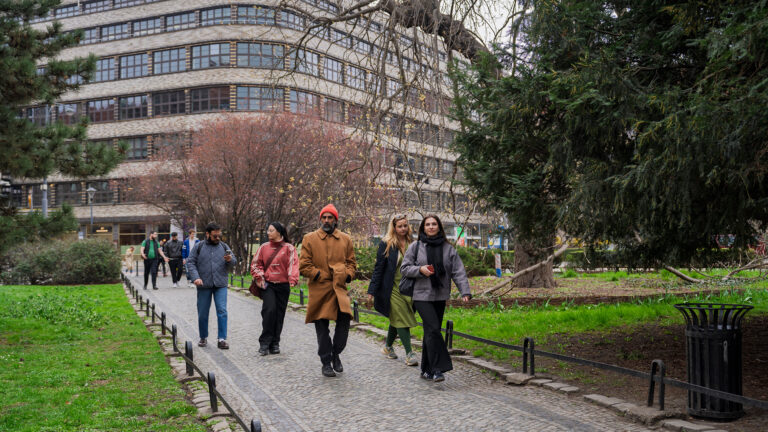
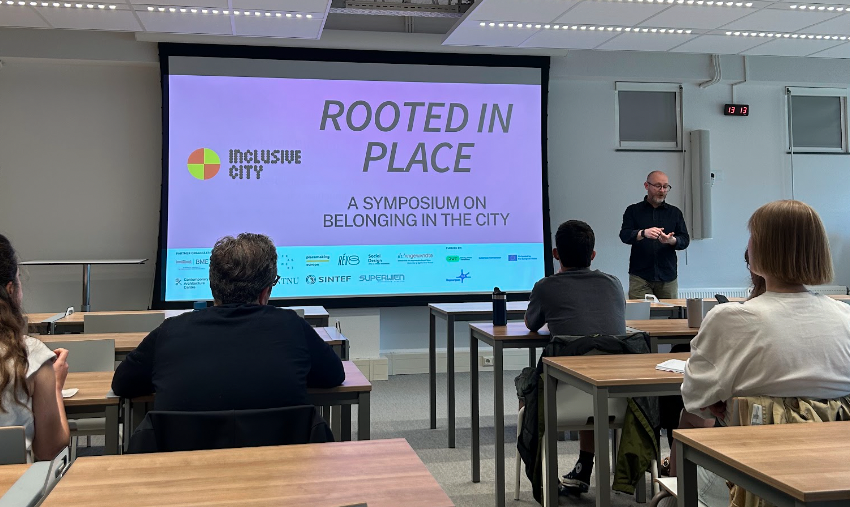
On 21 May 2026, the Rotterdam team of the Inclusive City project hosted ‘Rooted in Place’, an afternoon of research, reflection and conversation at Breda University of Applied Sciences. Two open presentations brought together practitioners, researchers and community builders to ask: what does it actually take for someone to feel they belong in a city?
There’s a question that keeps surfacing: what does it actually take for someone to feel they belong in a city?
At Rooted in Place, two research presentations, Peter van der Aalst on what young creatives need from the city, and Kristel Zegers, Ilja Simons and Esther Peperkamp on co-creation and representation in community murals, approached that question from different angles. What they shared was a refusal to settle for easy answers, and an honest reckoning with what keeps getting in the way.
Belonging is not a feeling you can programme
One of the clearest threads running through the afternoon was that belonging cannot be delivered top-down. It emerges — or doesn’t — from a dense web of smaller conditions: whether you feel safe enough to be non-mainstream, whether you see people who look like you in a space, whether the cost of entry (literal or psychological) puts the door just out of reach.
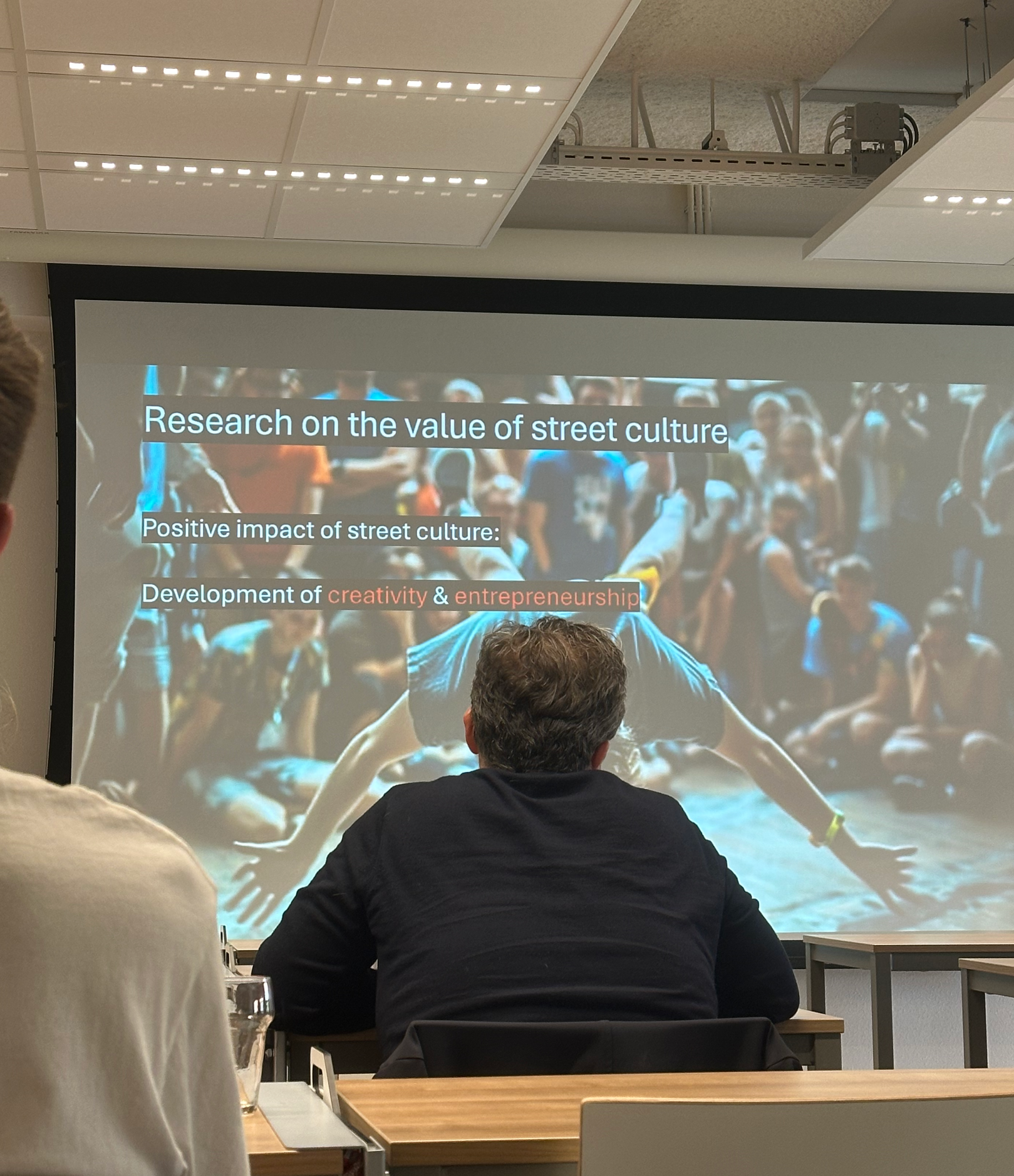
Street culture, nightlife and informal creative spaces were framed not as nice-to-haves but as infrastructure, sites of what van der Aalst called “informal education,” where young people develop skills, identities and social networks outside of formal institutions. The young person who leaves a music venue and becomes an event technician. The skatepark that holds a neighbourhood together during the day. These are not marginal stories. They are how belonging gets built.
What struck the room was the structural fragility of it all. Many of the initiatives doing this work don’t know year to year whether they can continue. Gentrification is an ever-present pressure. Activities cluster in city centres rather than in the neighbourhoods where target groups actually live. And programmes are planned about communities rather than with them, by the time people are invited in, the key decisions have already been made.
Three dimensions of urban belonging
Three interlocking conditions that determine whether a city truly makes room for people were identified:
- Accessibility and inclusion: who feels welcome, and who doesn’t, and why. Thresholds to participation are rarely just financial. Not seeing people who look like you in a space is its own form of exclusion.
- Safety: not only physical security, but social safety. If you don’t feel free to be non-mainstream, you won’t express yourself. Spaces that lose activity don’t just become quieter; they often become less safe. Positive presence deters the kind of emptiness that invites problems.
- Empowerment: the freedom to develop yourself outside of formal education, to build skills on your own terms, in spaces that are yours. This is where street culture, music, and creative venues do some of their most significant work — often invisibly, and often without institutional recognition.
When all three are in place, something real becomes possible. When any one is missing, the others struggle to compensate.
The “switcher” and why they matter more than we admit
One of the most generative concepts to emerge from the afternoon was what participants called the “switcher” — those rare individuals who can move fluidly between communities, institutions and systems, translating between worlds that don’t naturally communicate.
These are the youth workers who also run venues. The neighbourhood residents who become trusted guides. The project coordinators who know when to show up and when to step back. Without them, even well-resourced initiatives fail to connect. With them, something real becomes possible.
What’s notable is that city authorities are increasingly recognising this. Policy is no longer made purely from behind a desk, venue directors are being consulted on area development, community practitioners are being treated as genuine stakeholders. That’s progress. But switchers are also hard to find, hard to retain, and easy to burn out. Recognising their role informally is not the same as building the systems that support them.
What murals reveal about representation
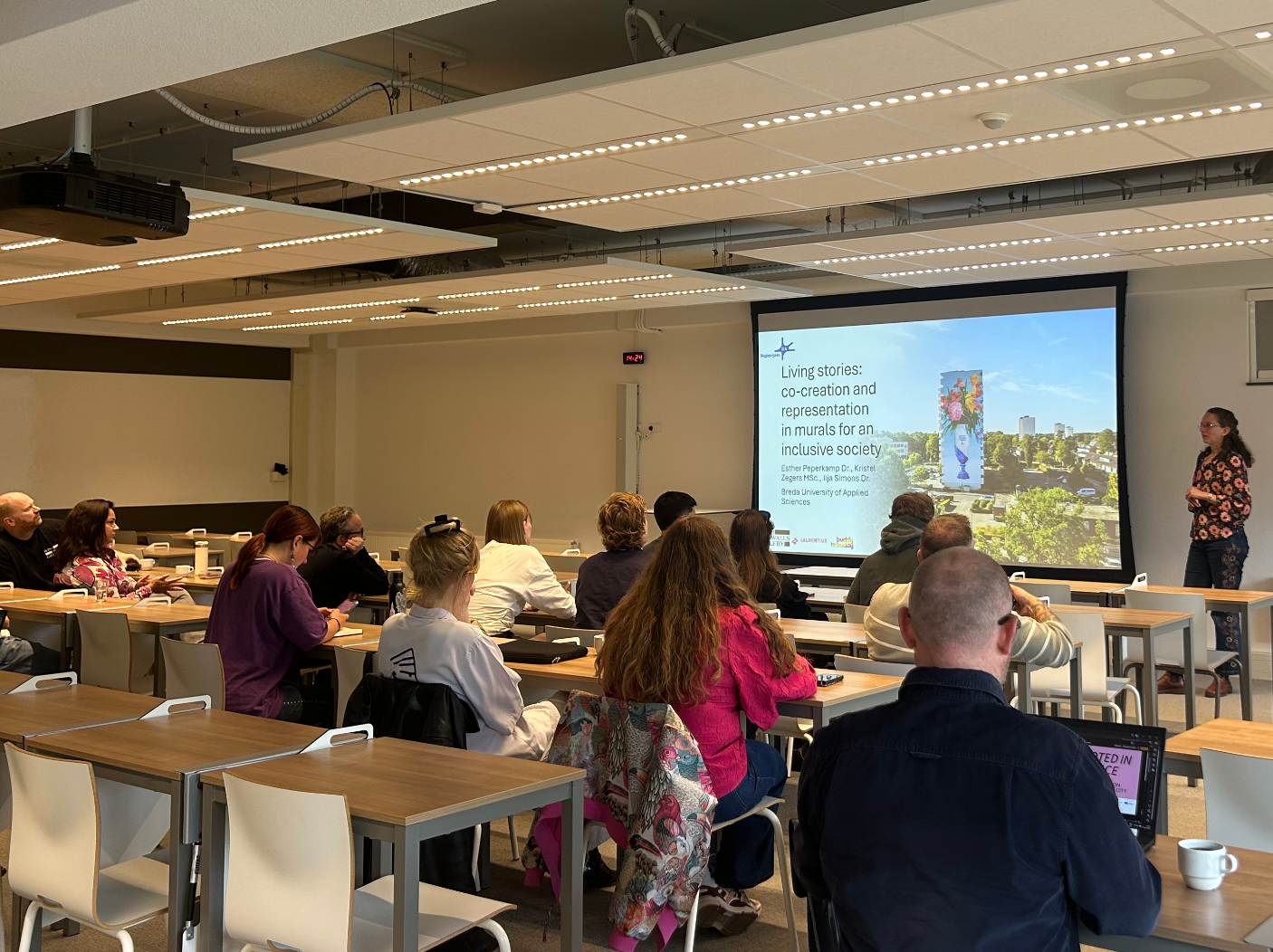
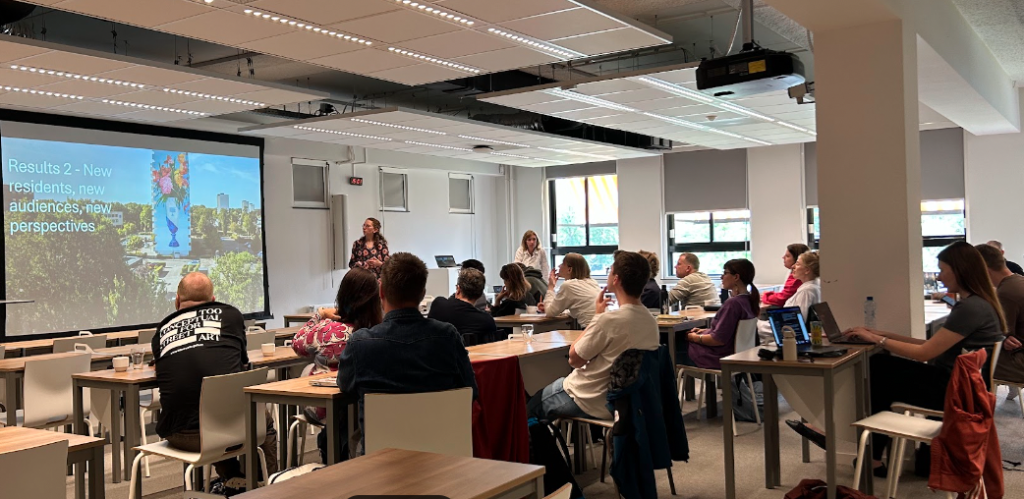
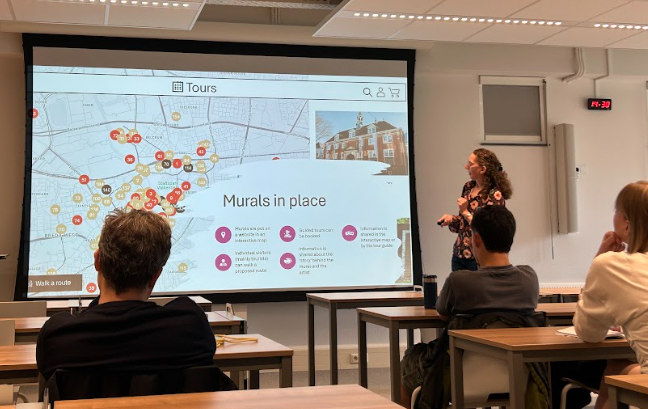
The second presentation turned to a year-long research project by Kristel Zegers, Ilja Simons and Esther Peperkamp documenting community mural-making processes across several Rotterdam neighbourhoods. On the surface, it might seem like a departure from questions of street culture and belonging. In practice, it was the same question approached from a different angle.
Murals are a useful lens precisely because they make implicit decisions visible. Who gets asked for input, and when? What question is put to residents — “Do you want a mural?” versus “Which design do you prefer?” versus “Do you recognise what we discussed?” — produces radically different kinds of engagement and very different outcomes. The research found that more participation does not automatically mean more success, and that some of the most meaningful moments, spontaneous conversations, unexpected connections, organic advocacy — happened in the margins of the formal process, and couldn’t have been planned.
The tours the team ran with new residents were equally revealing. People brought their own cultural backgrounds and life histories to what they saw: a mural near the station on the theme of justice was interpreted by a group of Syrian women primarily as a story about teamwork and mutual support. A large image of a woman in public space carried particular weight for an Iranian participant who saw it through the lens of the situation in Iran. The murals weren’t saying one thing. They were holding space for many things at once, and the tours became, as the researchers noted, a two-way process. Guides learned new stories from participants, which they carried into future tours.
One moment from the research stood out: a resident who came outside when a mural appeared on the exterior wall of her building and said, simply: “Look, there’s a mural on my wall.” Not the wall. My wall. That shift, from indifferent surface to owned space, is, in a sense, exactly what belonging looks like when it lands. It can’t be fully engineered, but it can be enabled.
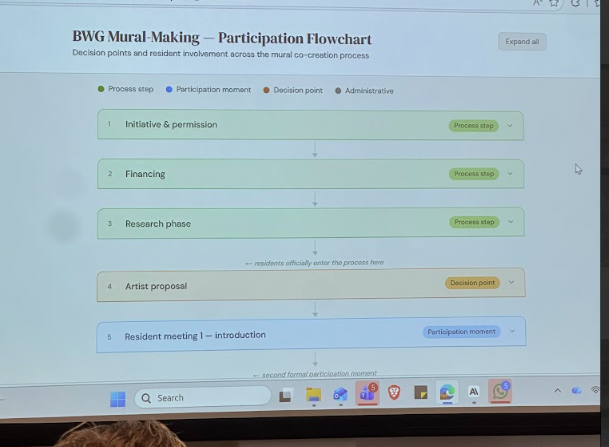
The team set out, in part, hoping to document a replicable process and a way of mapping how to co-create murals that others could follow. What they found was that no such process exists in a neat form. The steps are real, but they are not linear. Decisions fold back on each other. Funding timelines force commitments before communities are ready. Participation happens at different moments for different people, and often in the margins rather than the formal stages. The flowchart they are developing is a first draft, not a finished tool, and perhaps that incompleteness is itself the finding. Genuine co-creation resists being fully codified, and any framework that claims otherwise is probably flattening something important.
The risk of getting it almost right
Perhaps the sharpest tension in the room was around what happens when grassroots culture gets formalised. Tilburg’s Hall of Fame, once a vital, organic space for street art, was cited as a case where institutionalisation brought stability but also business logic, and with it a loss of something harder to name.
Rotterdam was assessed positively compared to other Dutch cities: good vision, genuine facilitation, a willingness to listen. But the concern was also present: that Rotterdam risks following Amsterdam, Berlin and London down a path where the culture a city sets out to support gets priced out by the very development it helped attract. Post-Covid shifts compound this and young people are increasingly gravitating toward smaller gatherings and informal spaces, away from large venues. The urban cultural landscape is changing, and cities that don’t adapt risk losing not just venues but the social fabric of those venues held together.
The warning is worth sitting with. If you make a neighbourhood desirable, you must also protect what made it that way. If you formalise a community practice, you must ask honestly what you are losing in the process. And if you bring something from the margins to the mainstream, the diversity and richness that made it worth bringing may not survive the journey intact.
What this means for the Inclusive City Project
These conversations sit right at the heart of what the Inclusive City programme is working through. Belonging is not just a social good, it is an urban design challenge, a policy question, a funding question, and a question of who gets to be in the room when decisions are made.
The afternoon left us with no clean conclusions, but with a set of more honest questions. Who are the switchers in your city, and how are you supporting them? When you say you’re engaging a community, at which point in the process are you actually doing it and does it make a real difference? And when something is working, in a neighbourhood, on a wall, in a venue what are you doing to make sure it can stay?
Belonging, it turns out, is less about grand gestures and more about those smaller, often invisible conditions that tell someone: you are supposed to be here. The work of the Inclusive City project is to make more of those conditions possible and to keep asking, honestly, whether we are.
You can find out more about the Inclusive City project by following the official LinkedIn and Instagram accounts.
Read more Community Page Blog articles relating to Inclusive City:
- 2+4 Days in Népszínház street – Educational Experiments on Inclusion – Budapest
- Public Space and Inclusion in Oslo: The Unseen City Walks – Oslo
- Inclusive City: Reclaiming Urban Spaces Through Care, Reflection, and Connection – Inclusive City at Placemaking Week Europe 2025
- Inclusive Placemaking in Practice: An Inspirational Cookbook of Tools for Inclusion