There are political crises that prepare the ground for urgency to stop being a reason to act and become an excuse to stop thinking. That is when the worst decisions are often made. Not because nothing should be done, but because speed starts to be confused with seriousness, and sacrifice is presented as the hegemonic language of government.
We are seeing this in the housing debate. Faced with rising prices, a shortage of supply and accumulated social pressure, more and more leaders are defending, with conviction, that what matters now is only to build more, faster and cheaper. We will deal later with quality, with urban integration, with public transport, with squares, with everyday life. The emergency, they tell us, does not allow us to maintain standards.
In a recent conversation with Martin Adler, a researcher at SEO Amsterdam Economics, we shared a concern about one of the disturbing tendencies of our time: when faced with a structural crisis, the political response increasingly acts with a broad brush and a short memory, as if urgency forced us to forget everything we already know
This is exactly what Elanor Boekholt-O’Sullivan, the new Dutch Minister of Housing and former military officer, seems to suggest. For her, faced with the housing deficit in the Netherlands, the immediate priority is to build much more and accept that not everything can be done with ideal standards from the very beginning. She sums it up in a very clear sentence: “luxury [that is, quality] takes time, and we do not have time”. It seems that appointing generals in emergency situations is not only a Valencian thing (the Valencian president Carlos Mazón’s appointment of retired lieutenant general Francisco José Gan Pampols as vice-president for the post-DANA recovery, after the 2024 floods).
O’Sullivan stated in the interview: “In the army, especially during missions, soldiers are much more easily satisfied. I make sure I can eat, sleep, work and shower. We need to become more sober again.”
At first glance, the argument has the appearance of honest pragmatism. If people need a home, who are we to demand beauty, durability or urban coherence? If families are being pushed out of the residential market, would it not be obscene to delay developments in the name of urban ideals? But that framing hides the central question. The question is not whether we need to build, but where, how and for whom we are willing to lower the bar.
Because this rhetoric almost never appears when the best-located plots are at stake, the central neighbourhoods, the well-connected environments, the places with the highest real estate value. Those spaces have usually already been planned or developed with considerable care, very often with those who have greater purchasing power in mind.
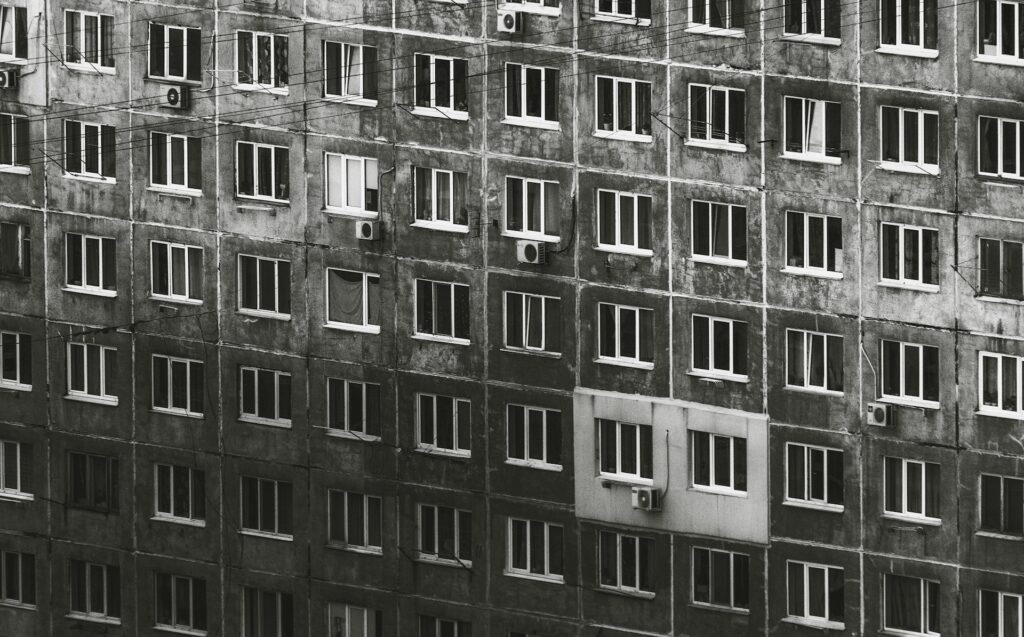
The discourse of quantity over quality usually arrives later, when what remains to be urbanised are the leftover pieces: the less desired peripheries, the most difficult interstices, the worst-connected areas, the neighbourhoods without councillors to represent them and with less symbolic value.
That is what makes this new sincerity suspicious. We are not simply facing a response to the housing crisis. We may also be facing a political decision about which lives deserve a complete city and which can make do with a reduced version of one. A badly built or badly located home is still a home, yes. But it is also a way of distributing inequality in the form of concrete, lost time, car dependency, absence of services and community fragility.
And once built, these decisions condition decades of life.
The political move is skilful. Sacrifice is presented as if it were inevitable and even moral. Criticism is passed off as elitism. It is suggested that whoever defends quality does not understand the magnitude of the urgency. But urban history is full of examples that prove the opposite: building badly in the name of necessity usually generates costs that later grow with interest.
Isolation, degradation, territorial stigmatisation, maintenance problems, infrastructural dependency, resentment. We already know this. We have seen it too many times.
The problem is that housing is not a simple problem, nor even a complex problem. It is an intractable problem. That is, one of those public issues that does not admit a clean, definitive and technically optimised solution. There is no magic lever, no perfect curve, no algorithm capable of solving something that is, at the same time, financial, territorial, social, cultural and political. To think otherwise is a technocratic fantasy.
The housing crisis is inseparable from the price of land, from financial markets, from income inequality, from everyday mobility, from the provision of services, from local taxation, from the type of city we have incentivised for decades and even from our idea of what matters in life. It is not solved only by building more, just as it is not solved only by regulating prices, nor only by mobilising empty housing, nor only by providing rent subsidies. All of that may be necessary.
But none of it, by itself, is sufficient.
Precisely because it is an intractable problem, it demands an adult politics. A politics capable of combining urgent measures with a long view. Of making quick decisions without falling into the temptation of simplifying everything. Of recognising that there are real tensions, but also renunciations that should not be accepted.
Because housing is not only shelter. And above all, housing is not only a financial asset. A decent home does not end at the front door. It continues in the street, in the square, on the pavement, in local shops, at the bus stop, under the shade of a tree, in the possibility of living life without having to rush out before the sun has risen and return defeated at dusk.
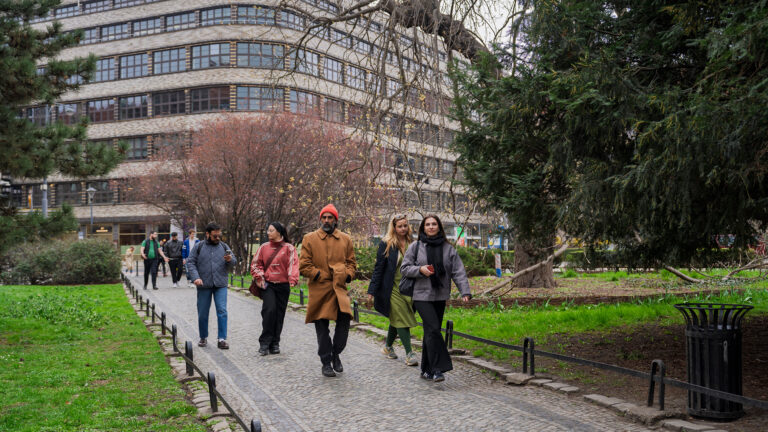
For too long we have thought of the housing agenda and the public space agenda as if they had nothing to do with each other. Public space cannot be only a friendly layer added at the end, once everything has already been decided. It is not urban make-up, nor four trees and children’s games dropped in to compensate for bad structural decisions. Housing must be thought from the lived city: from proximity, the mix of everyday uses, coexistence and the sense of being from a place.
And, conversely, public space cannot turn its back on housing either. There are no lively, diverse and inclusive places if neighbours are expelled, if centrality is reserved for those who can pay for it, or if urban policies beautify what the market is emptying from within. The virtuous relationship between housing and public space begins with a simple evidence: there is no good city without decent housing, and there is no decent housing outside a shared and bold idea of the city.
That is why the challenge is not to choose between urgency and quality, as if they were incompatible terms. The challenge is to reject that false dilemma. We need to build, yes, and probably to build a lot. But we need to do it without normalising second-class urbanisation. We need speed, but not at the cost of consolidating spatial inequalities that will then take generations to correct. We need more supply, yes, but also more city.
Because the most dangerous moments are not only those in which a system fails. They are those in which that failure is renamed realism, and we are asked to accept it as if it were the only possible option. And no, it is not. What is missing is not only land, nor only money, nor only housing. What is missing, above all, is a public ambition equal to the problem, capable of making housing without ceasing to make city.