Many waterfronts become successful by ceasing to be ports. They keep the views, cranes, dock names and promise of seafood, but remove the working life that made the place meaningful. What remains can be profitable, but also strangely hollow: a port without port life.
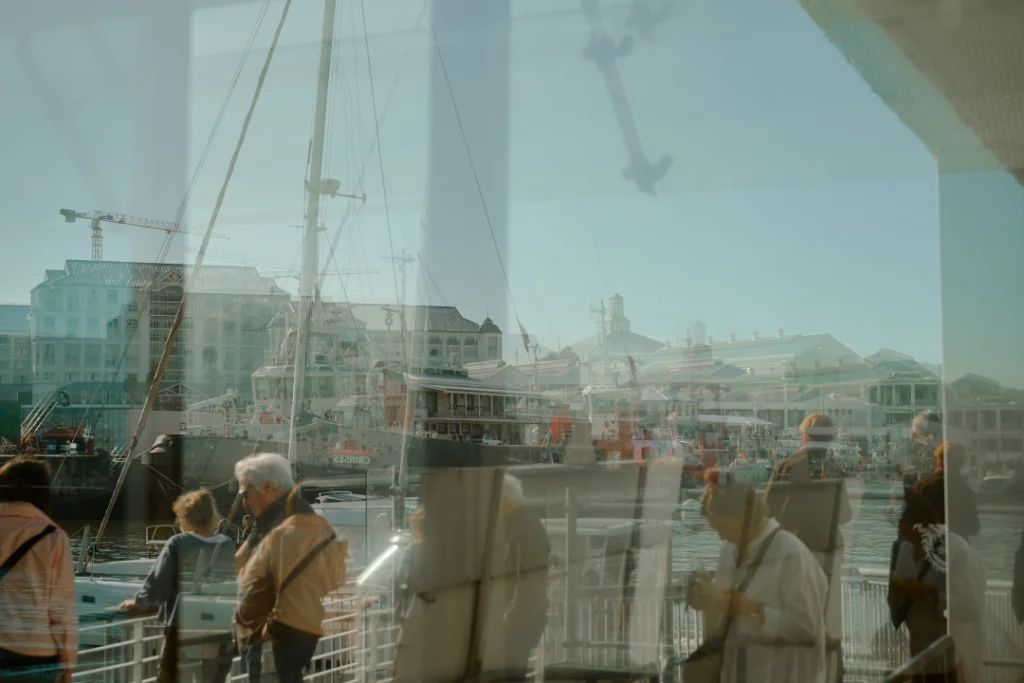
The V&A Waterfront is different. It has hotels, restaurants, offices, shops, museums, apartments, public spaces and millions of visitors, but it still operates within a working harbour. Fishing vessels, yachts, cruise ships, commercial vessels and pleasure boats are part of the everyday scene. Its industrial portfolio includes fishing companies, fuel supply, dry dock and yacht-building facilities, a working syncrolift and the Cape Town Cruise Terminal. The fishing presence is not symbolic: a significant share of South Africa’s hake catch is landed at the Waterfront. The water is not only a backdrop, and the maritime identity is not only branding.
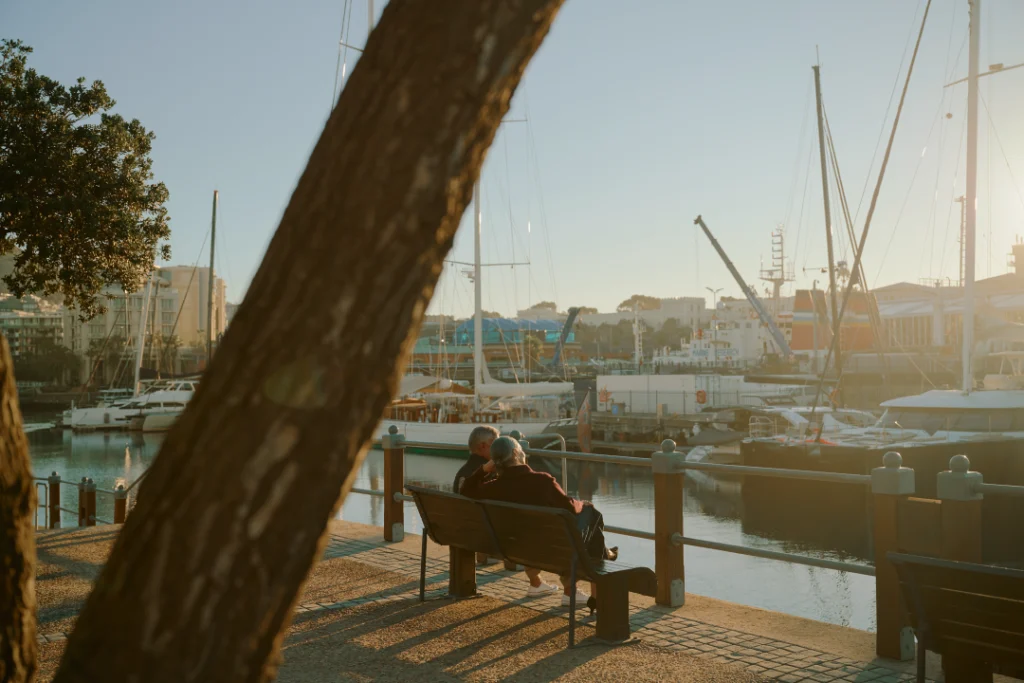
This is the result of governance, not chance. The V&A is a district-level organisation with the capacity to operate a complex place over time: public realm, infrastructure, tenant mix, cultural programming, sustainability, employment initiatives, mobility, heritage and future development. This is the key point: place-led development at district scale is also about ownership, management, contracts, infrastructure, revenue and long-term stewardship.
The Waterfront began around 35 years ago as an effort to reconnect Cape Town with its historic docks and has evolved into a 123-hectare mixed-use district. During the 2000s, international capital, including Dubai World through a wider consortium, became involved, and the place risked moving towards a development logic detached from local stewardship. The later return to South African hands, through Growthpoint and the Public Investment Corporation, seems to have been a turning point.
This is not a simple story of public versus private. The current model is commercially driven, but also locally rooted, institutionally held and managed with a long-term interest in the district as a whole. The owners are long-term owner-developers and precinct operators, not developers in the narrow build-and-exit sense. They keep ownership of the land, buildings and development rights, creating a patient capital model: value is generated through development, rental income, tenant mix, infrastructure, public realm, hospitality and culture, rather than through selling the place piece by piece. This gives the organisation a revenue model for management and reinvestment.
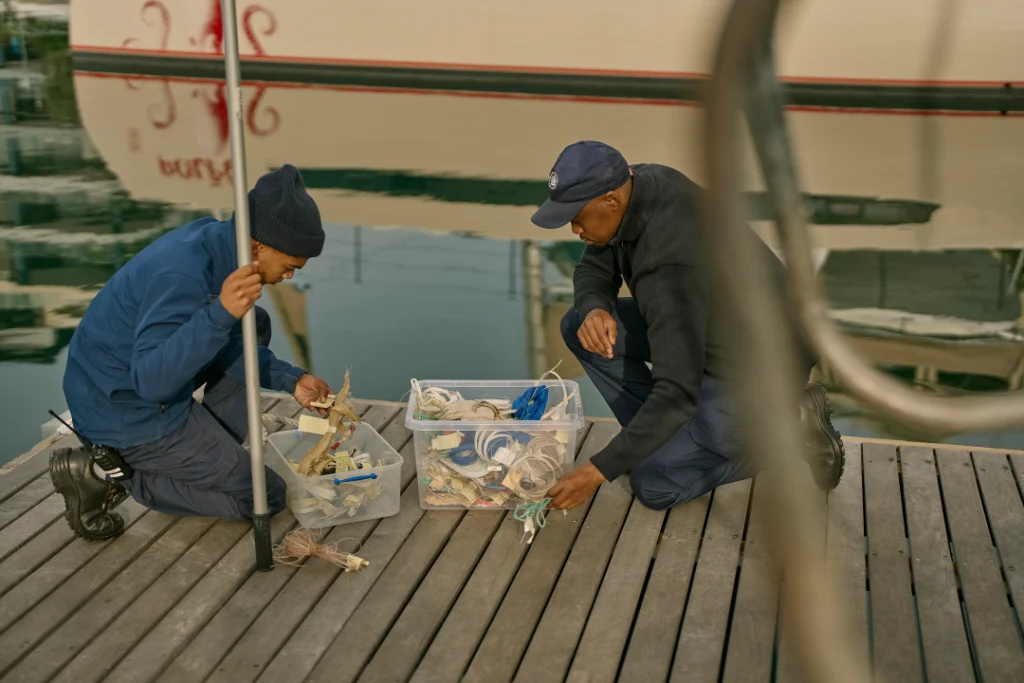
The operating model is embedded locally. The fishing fleet is one of the clearest examples. In many transformed waterfronts, the working port disappears from the public-facing city, while a softer maritime aesthetic remains. At the V&A, the fishing fleet remains part of the public waterfront, not hidden away in the commercial port. The boats, workers, routines and practical needs of fishing remain part of the district’s identity. They create friction, but also authenticity: not as style, but as continued use.
This also shapes the food and restaurant offer. The V&A Waterfront is exploring a model to for restaurants and businesses to support sustainable seafood practices, with work around sustainable seafood, local supply, small business support and the blue economy. Tenants in a district are never neutral. They either reinforce the identity and purpose of a place, or they slowly empty it of meaning.
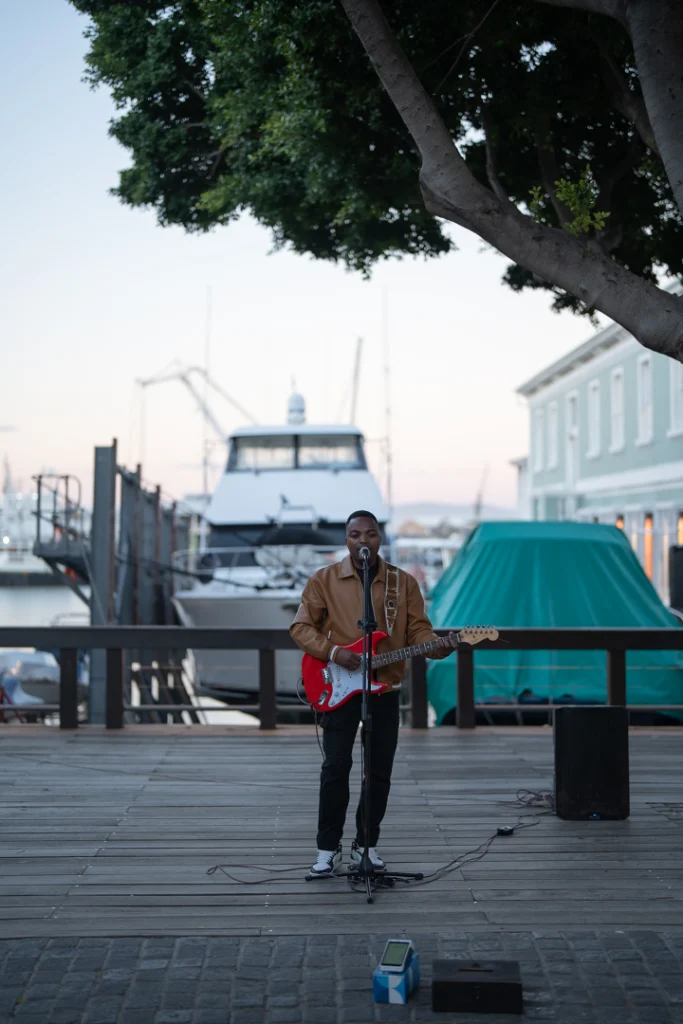
The cultural dimension follows a similar logic. Zeitz MOCAA is housed in a reimagined grain silo and dedicated to contemporary art from Africa and its diaspora. At its best, culture connects the Waterfront to African artistic production, memory, heritage and contemporary debate. Current and future placemaking work also points in this direction: telling local stories, including coastal and pre-colonial stories, and aligning art and public space with the deeper heritage of the place.
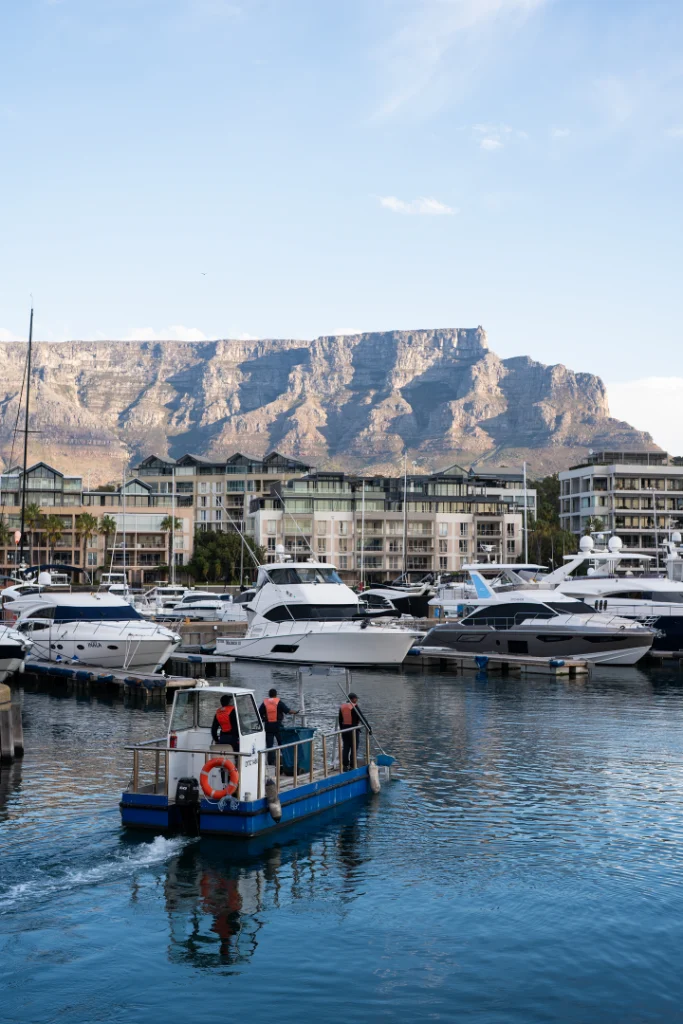
There is also a strong environmental dimension. The Waterfront’s sustainability work includes biodiversity, renewable energy, responsible business practices and district infrastructure, including cooling using seawater. Its maritime character is also ecological: the V&A works with the Two Oceans Aquarium Foundation on marine wildlife management, including seal disentanglement, seabird support, sunfish rescues, the Turtle Conservation Centre and wider wildlife monitoring. The Marine Wildlife Walk makes this visible to visitors, and the future Living Sea Wall project proposes habitat panels to create a vertical reef.
The same applies to employment and skills. Around 30,000 people work at the Waterfront. The organisation has developed a youth skills and employment programme that connects training with actual jobs in the district, with anincreasing trainee retention rate as the programme has evolved since its inception. This shows that a district-level organisation can become a platform for local capability building.
Of course, this does not remove the tensions. A privately owned and managed public-facing district will always raise questions about access, affordability, control and representation, and about how the Waterfront relates to Cape Town’s wider inequalities.
This is where the V&A becomes relevant for port cities and waterfront districts . Too often, the debate is reduced to a false choice: either the port remains closed and disconnected from the city, or the waterfront is opened up but stripped of its productive life. The V&A suggests a more interesting possibility: transformation without ceasing to be a port.
Mature placemaking needs more than activation, design and participation. It also needs governance, revenue, infrastructure and long-term operational capacity. The V&A Waterfront is globally visible and still locally grounded, commercially successful and still place-led, public-facing without erasing the working port. That is the conversation we need more of: not only how to create attractive places, but how to govern them; not only how to open waterfronts, but how to keep them meaningful; not only how to transform former industrial or port areas, but how to do so without erasing the work, memory and local economies that made them matter in the first place.

Acknowledgement
A warm thank you to Karla de la Bat, placemaking specialist, Barbara Southworth, urban design director, and Petro Myburgh, senior manager for sustainability, for welcoming us so generously, sharing their time and knowledge, and providing the pictures that helped tell this story.
Photo credit: V&A waterfront