
As we venture into spring, I can’t help but feel grateful for one place I sought comfort in during Rotterdam’s cold and wet winters, a season that often discourages me from being outside and using public space.
One space flipped that narrative: Fenix Plein, an unconventional square in the vibrant Katendrecht and Rijnhaven area of Rotterdam.

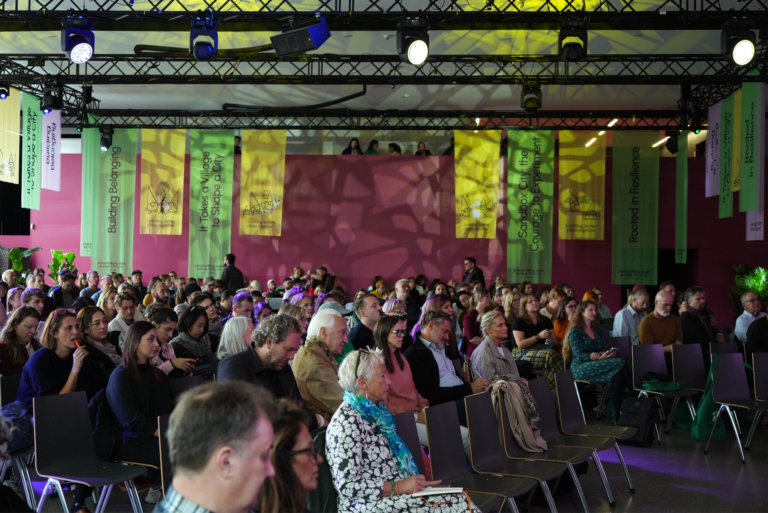
Unlike traditional outdoor squares, Fenix Plein is completely indoors, yet it feels spacious and welcoming. It offers a climate-protected environment that invites people to linger, meet and play. With seating, Wi-Fi, power outlets and public amenities, it is comfortable, accessible and flexible, acting as a true civic hub.
I would come to read, to work, sometimes simply curious about the activities they hosted. A community dinner. A chat with one of the workers. A quiet afternoon surrounded by the gentle hum of others doing the same.
What stuck out to me was that it felt like a place free from the subtle shackles of needing to consume in order to belong.
And I couldn’t help but notice the people who also sought refuge in the warmth, both physical and metaphorical, of the square.
Children and families.
Mothers of different ethnicities sitting together, having tea or simply chatting while their children played, crafted in the corner, filmed TikToks after school or kick-scootered freely across the open floor.
People walking in with their dogs for a brief rest from the cold.
Elderly residents finding a place to sit, read and observe.


And then there was the group of Chinese aunties and uncles who came almost daily to play table tennis. They would gather around the picnic tables, sharing home brought snacks and drinks during their breaks, chatting animatedly between matches. One of the staff workers told me they came nearly every day, sometimes even arriving just before the doors opened, eager to begin their daily practice.
They had created a small space of community within the larger square.

There’s a weekly free Dutch language café, open to anyone who wants to practise or brush up on their language skills in a pressure-free setting.
Their ‘Aan tafel met de buren’ (At the table with the neighbours) initiative by Stichting Mano offers affordable meals every Tuesday and brings Rotterdamers together around long tables. Each dinner features a different cuisine, reflecting the diversity of the city. The title itself speaks to its communal nature, centred around a simple but powerful question: how well do you know your neighbour?
And to top it off, this week they will host Het Grote Iftar Buurtdiner (The Big Iftar Neighbourhood Dinner), a large community Iftar celebrating Ramadan, coordinated by Plein, Alien Mag and the Mano Foundation. The initiative extends generosity further: those who wish can pay a little extra to make the meal more affordable for someone else, offering inclusive choices and creating a truly shared table.
But Plein’s programming is not limited to dinners and language cafés. Community activities continue to grow — for example, a self-organised yoga group that asked to use part of the space and now meets there regularly.
And every month, new and unexpected events pop up. Small cultural gatherings, informative nights, panels and celebrations. There is always something happening that invites you to return.
People don’t just attend events here. They adopt the space.
There is also a deeper meaning behind the square. It is strategic and a homage to the history and culture of the neighbourhood. Plein is part of the Fenix museum, a museum of migration, reflecting the layered history of Katendrecht.

Above: family portrait of Zee Che Chai, Neeltje Kraaijeveld, and their children—a notable Chinese-Dutch mixed-family from Rotterdam’s Katendrecht neighbourhood, taken at Verhalenhuis (The House of Stories, Rotterdam, Katendrecht)
Katendrecht has long been shaped by movement: sailors, dockworkers, Chinese seafarers in the early twentieth century, later waves of migration, and now new residents drawn by redevelopment. Migration has always defined this area. In that sense, a square, a meeting place, feels symbolic.
Movement and meeting.
When I spoke to people who came out of curiosity, many were from nearby neighbourhoods, others from different parts of Rotterdam. The square becomes a bridge between old and new, long-time residents and newcomers, neighbourhood and city.
Through the lens of the Inclusive City project I have been working on, particularly focusing on Rijnhaven, a place like Plein feels especially important.


Above: Cities in Placemaking Programme’s Rotterdam site visit with the Municipality of Rotterdam, learning about the new Rijnhaven development.
Rijnhaven is transforming. New housing, new public spaces, new waterfront ambitions. But development alone does not create connection.
Spaces like Plein do.
Especially next to neighbourhoods with significant social housing and diverse communities, a low-threshold, non-commercial place to gather matters. A place where you can sit without buying. Where you can meet without booking. Where you can simply be.
Winter often exposes the fragility of public life and Fenix Plein quietly resists that fragility.
It reminds me that public space is not seasonal, it just needs care.
If you’re in Rotterdam don’t forget to pass by Plein and the Fenix Museum. You can find more information and the monthly programming of the square on their website.