On 7 May 2026, Paiporta will host the second edition of Innovation for Recovery, a joint initiative by elDiario.es Comunitat Valenciana and Placemaking Europe that seeks to assess post-flood reconstruction in a transparent, public and critical way.
For many in the Placemaking Europe community, this conversation goes far beyond one municipality or one disaster. It touches on a broader European challenge: how to rebuild after crisis in ways that are not only faster, but fairer, more place-based and more democratic. In that sense, Paiporta is not only a local case. It is also a testing ground for how recovery can become a collective civic project.
One year after the first edition, held in Catarroja only a few months after the catastrophe, it is becoming increasingly important not to confuse recovery with repair. Removing mud, fixing streets, replacing street furniture, reopening services and processing aid are all necessary steps. But they are not enough, as if a damaged territory were simply a broken machine and recovery only required changing a few parts until everything worked again.A society hit by disaster cannot be rebuilt through public works, technical certificates and press releases alone.
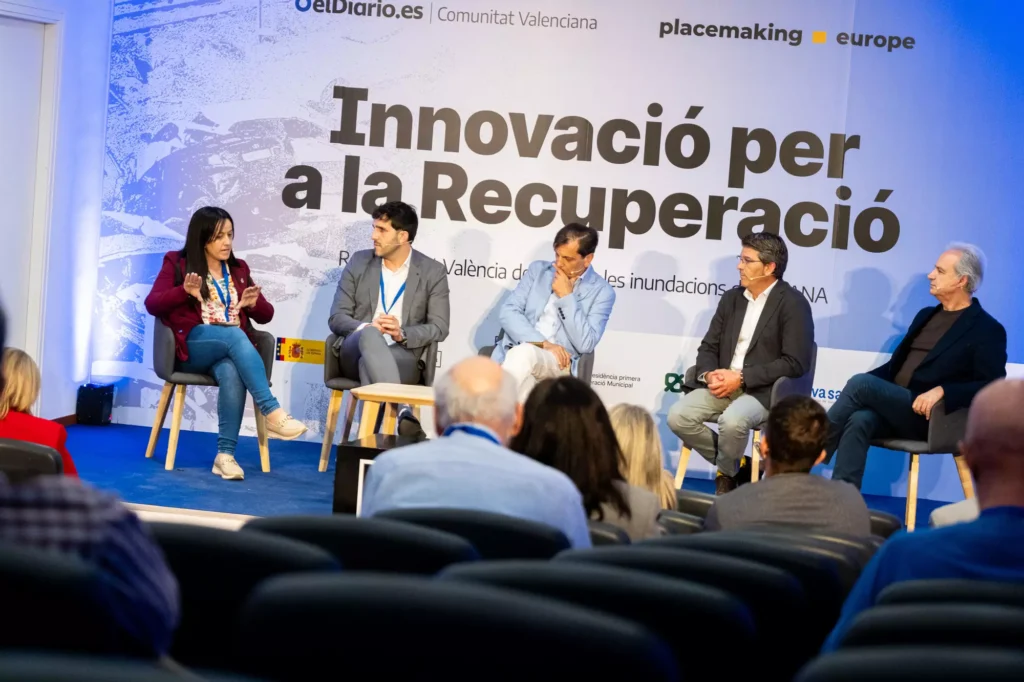
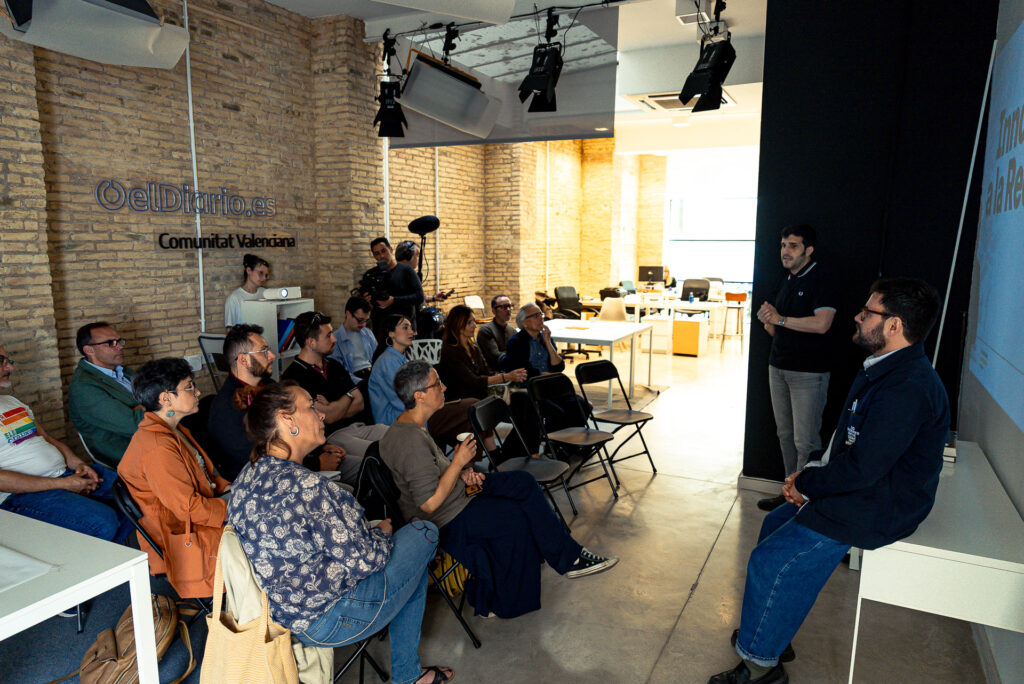
The second edition of Innovation for Recovery, which will take place at the Museu de la Rajoleria in Paiporta –the most affected municipality in the Valencia metropolitan area–, will place this question at the centre of the discussion. Recovery must be understood as a social, territorial and political process that needs to be interpreted, debated and followed over time.
Because rebuilding is not only about restoring what was lost. It is also about asking deeper questions: about trust, about coordination, about whether institutions are able to listen, and about whether citizens are being treated as active participants rather than passive witnesses in a process that will shape their future.
This year’s edition aims to take an important step forward by moving towards a citizen observatory of recovery. The idea matters because it offers a practical tool to listen, interpret and monitor the recovery process from a collective, territorial and future-oriented perspective. It starts from an idea that is too often ignored: reconstruction needs technical and scientific knowledge, but it also needs citizens, social organisations, front-line municipalities, and spaces capable of turning lived experience into public intelligence.
The initiative will once again be structured in three phases. The first will be a citizen survey, launched next through elDiario.es Comunitat Valenciana, gathering perceptions and priorities about the current state of recovery among residents of affected municipalities and other actors connected to the process. The second will be a qualitative phase of exchange and contrast involving public administrations, civil society organisations, technical teams, academics and other key voices. The third will culminate in the public and institutional event on 7 May in Paiporta, where results will be shared, priorities debated and local and international perspectives brought into dialogue.
In other words: first listen, then contrast, and finally bring what has been learned into the public arena.
The event on 7 May will be organised around four key themes. The first is resilience and sustainability: how to rebuild a territory that is better prepared for future shocks, with stronger climate adaptation and water resilience criteria. The second is infrastructure, understood not only as an engineering issue but as the material basis of everyday life: mobility, water, basic services, public space and useful planning. The third is social and cultural recovery, because no town truly recovers if it only restores its physical shell while neglecting social bonds, shared spaces, cultural life and the collective meaning of place. The fourth is the perspective of affected municipalities, meaning the view from those who must manage, on the ground, the tensions, delays, priorities and coordination gaps that every reconstruction process tends to reveal.
The day will bring together institutions, affected municipalities, civil society organisations, technical teams and academic voices with direct knowledge of recovery from both the ground and from public management.
In this context, Zulima Pérez, Special Commissioner of the Government of Spain for the reconstruction and repair of the damage caused by the DANA, will bring the perspective of state-level coordination and territorial adaptation. Marian Val, Deputy Mayor and Councillor for Reconstruction and Urbanism of Paiporta, will represent the local scale where recovery becomes concrete decisions about urbanism, reconstruction and daily life. Natàlia Enguix, Vice-President of the Provincial Council of Valencia, will contribute a supramunicipal perspective and reflect on how institutions can support affected local governments.
Alongside them, invited voices such as Marcos Ros, Member of the European Parliament and rapporteur on the New European Bauhaus report; Fredrik Lindstål, former Vice Mayor of Stockholm and former Chair of the Port of Stockholm; and Guillermo Bernal, Executive Director of The Place Institute and board member of PlacemakingX, will help widen the lens without displacing the centre of the debate. Ros will connect local experience with European discussions on urban quality and territorial development. Lindstål will bring a valuable perspective on urban governance, infrastructure and institutional capacity. Bernal will remind us that territories recover through relationships, community and contextual understanding.
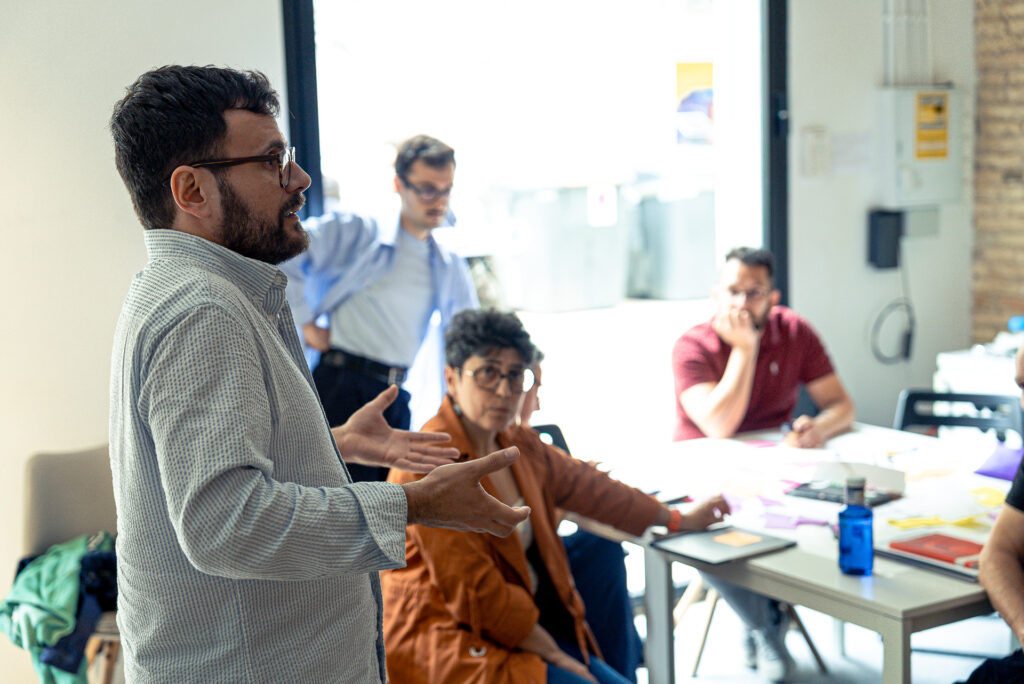
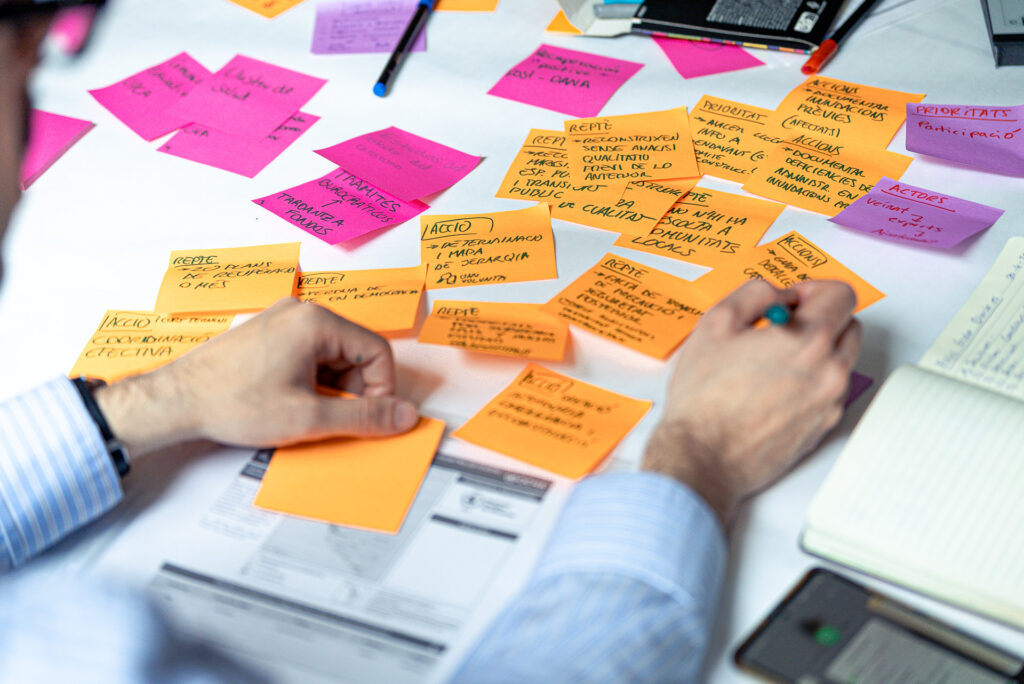
The goal is not to import ready-made solutions, but to create a meaningful dialogue between the lived experience of the territory and wider frameworks and lessons from elsewhere.
This is precisely why the alliance between an independent media outlet and an organisation dedicated to public space and place-based development across Europe makes sense. At a time of institutional fatigue, civic distrust and growing disconnection between decision-making and daily life, this combination becomes especially relevant.
For Placemaking Europe, this is also part of a larger commitment: to support forms of recovery that do not reduce places to physical assets, but recognise them as lived, shared and political environments. Public space, local knowledge, social infrastructure and collective agency are not secondary concerns in moments of reconstruction. They are central to whether recovery is meaningful, legitimate and lasting.
The process will result in a document of recommendations and follow-up, and it will also be documented through journalistic pieces and transmedia formats developed with elDiario.es. The ambition is for Innovation for Recovery not to remain a one-off event, but to become an ongoing tool with continuity and a clear intention to return in 2027.